

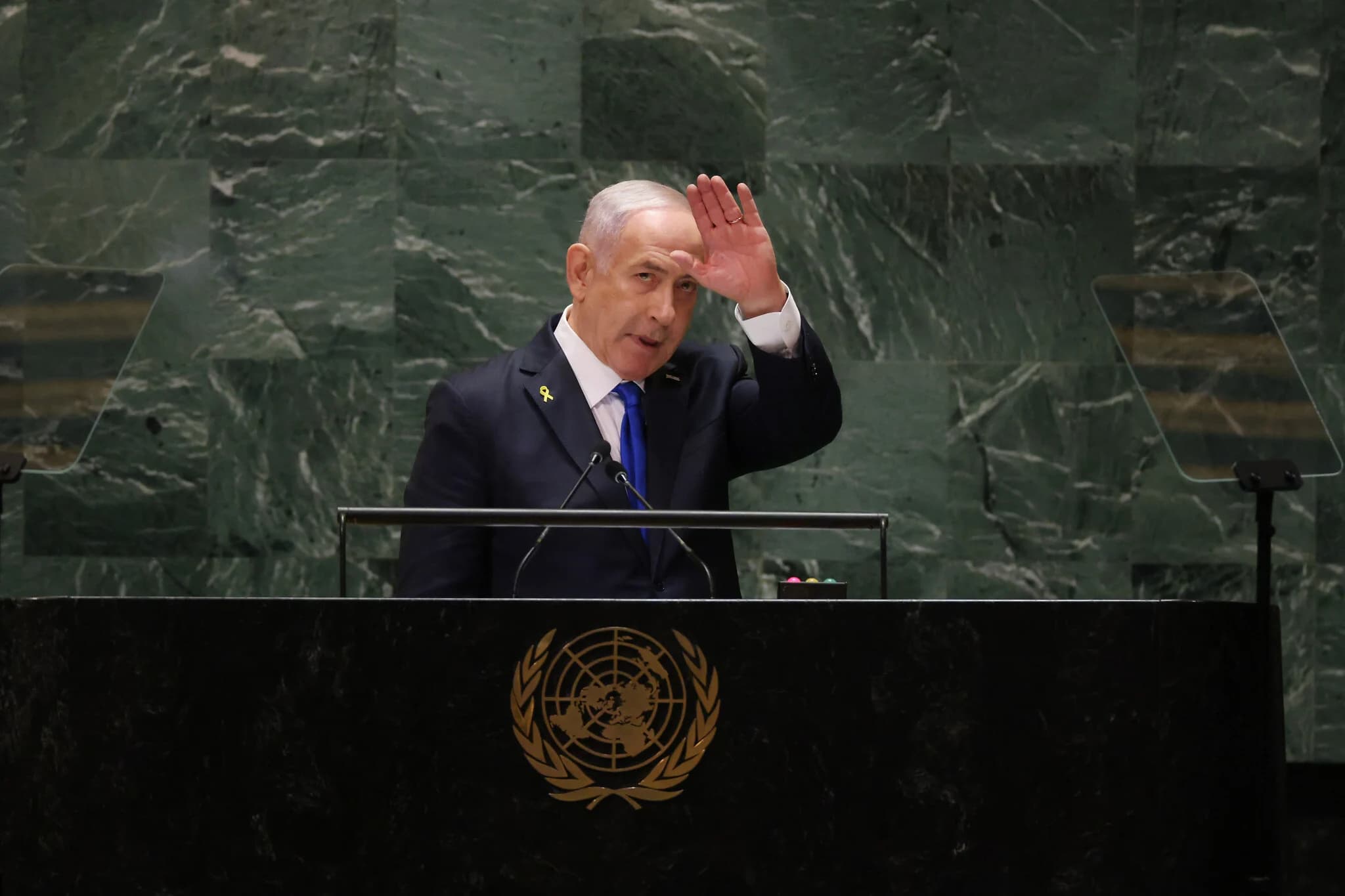
Israeli Prime Minister Benjamin Netanyahu's September 2026 address to the United Nations General Assembly ignited a firestorm of controversy, extending far beyond the typical geopolitical discourse to include a direct, scathing attack on New York City Mayor Zohran Mamdani. The speech, delivered against the backdrop of an ongoing and devastating war, highlighted deep divisions over Israel's military actions and the boundaries of political dissent.
Netanyahu’s remarks have been characterized as both a defense of Israel’s survival and a calculated political maneuver aimed at a domestic audience back home. The ensuing fallout has polarized political figures in New York and drawn condemnation from some local Jewish Democratic leaders.
A Direct Attack on Local Leadership
The most shocking element of Netanyahu's UN address central to the broader Benjamin Netanyahu UN Speech and Allegations was his pointed criticism of Mayor Zohran Mamdani. Rather than focusing solely on international relations, the Israeli leader utilized the global platform to launch a Benjamin Netanyahu Direct Attack on the local American politician, labeling Mamdani "antisemitic" and declaring that the mayor had made Jewish residents in New York feel unsafe.
Netanyahu went further, referring to the militant group Hamas as Mamdani’s "buddies." He stated: "Israel didn’t commit genocide. Israel prevented genocide. And that’s exactly what Mr. Mamdani’s Hamas buddies would have done to us, had we not stopped them".
The attack was a response to Mamdani's vocal criticism of Israel's military operations in Gaza and his previous, albeit legally unenforceable, campaign promise to have the NYPD arrest Netanyahu based on an International Criminal Court warrant.
Netanyahu framed the mayor's actions as a deliberate attempt to silence him. "Mr. Mamdani, you tried to stop me from coming here," Netanyahu said. "You tried to silence me. Well, you can’t silence me, and you can’t silence the truth". These remarks underscored ongoing Benjamin Netanyahu Silencing Efforts discussions across media outlets.
Backlash and Defense from New York Democrats
The Prime Minister's allegations prompted a swift response from New York's political sphere. Several prominent Jewish Democrats rallied to defend Mamdani and condemn Netanyahu’s rhetoric.
- Manhattan Borough President Brad Hoylman-Sigal: Called the claims that Mamdani supports Hamas "defamatory" and characterized Netanyahu’s speech as a "political ploy" and a "deflection" by a leader facing domestic turmoil.
- City Council Speaker Julie Menin: Stated that Netanyahu’s words were unhelpful in reducing tensions and warned that such rhetoric could incite violence.
- New York City Comptroller Brad Lander: Accused Netanyahu of "cynically weaponizing accusations of antisemitism for their own narrow, selfish political purposes," arguing that such actions make everyone, including Israelis and American Jews, "less safe".
Governor Kathy Hochul also criticized the Prime Minister's remarks, stating that calling the mayor a supporter of "Hamas monsters" was false and ultimately damaged Netanyahu's own credibility.
In response to the speech, Mayor Mamdani released a statement accusing Netanyahu of using the UN platform to "repeat baseless lies meant to sanitize his genocide of Palestinians". He reiterated his stance that Netanyahu remains the subject of an ICC arrest warrant for alleged war crimes. Mamdani’s supporters have frequently noted that he has previously condemned Hamas as a terrorist organization and denounced antisemitic hate crimes.
Key Speech Topic | Prime Minister's View | Critic Response |
Gaza War | Stopped mass harm | Called it a crime |
Local Leaders | Hurt community safety | Backed free speech |
Global Ties | Fought multi-front foes | Demanded law rules |
Security Claims and Domestic Audiences
Netanyahu used the address to emphasize the purported threat faced by Jewish communities globally, The speech also unfolded against the backdrop of the wider Israel-Iran conflict. framing various Benjamin Netanyahu Safety Claims around the world. The speech also unfolded against the backdrop of the wider Israel-Iran conflict, linking local criticism of Israel to increased insecurity. By focusing on Mamdani, Netanyahu sought to paint a picture of a broader international conspiracy against Israel and Jewish people.
However, political analysts have suggested that the primary audience for this aggressive rhetoric was not the UN delegates, many of whom walked out during the speech, but the Israeli public. Facing political pressure and an upcoming election, Netanyahu’s strategy appeared designed to project strength and defiance against international condemnation.
"Israelis, I think, look at this and they say to themselves: 'The world is against us no matter what, but thank God we have a leader... who can stand up to everyone and stick it to them,'" one veteran Israeli political analyst noted, emphasizing that Netanyahu was likely trying to shore up his domestic political survival.
Conclusion
Benjamin Netanyahu’s 2026 UN speech represents a significant escalation in rhetoric, utilizing an international forum to wage a direct political feud with a local American mayor. The incident highlights the complex interplay between local politics, international conflicts, and the deeply polarized debate surrounding the war in Gaza. As international pressure mounts and domestic political realities shift, the reverberations of this controversial address are likely to continue shaping the political landscape in both Israel and the United States.