

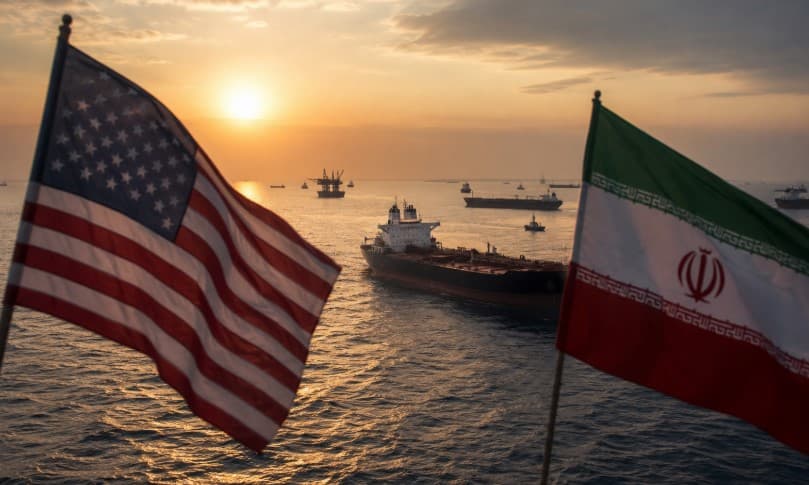
The possibility of a US-Iran peace agreement is doing what no OPEC meeting has managed in months: pushing oil prices sharply lower. On Monday, Brent crude fell 5.5% to $97.90 a barrel, while US-traded crude dropped nearly 6%. The US-Iran peace deal oil prices relationship has never been more direct, or more fragile.
What Happened
US Secretary of State Marco Rubio, speaking from New Delhi, said negotiators have "a pretty solid thing on the table." President Trump separately announced that an agreement has been "largely negotiated" involving the United States, Iran, and several Gulf states, centered on a Memorandum of Understanding for peace. The critical prize: reopening the Strait of Hormuz, effectively closed since a conflict began on 28 February 2026, a waterway through which roughly one-fifth of global oil and LNG normally flows.
Why This Matters Beyond Headlines
This is not a routine diplomatic breakthrough. The Strait of Hormuz closure has functioned as a structural tax on the global economy for nearly three months. Oil traded near $70 a barrel before hostilities began. Today's price, even after the sharp drop, remains nearly 40% higher. Every week the strait stays closed, oil stocks globally deplete at historically unprecedented rates, according to energy analyst Saul Kavonic of MST Financial.
The conflict did not merely disrupt shipping lanes. It exposed the extraordinary fragility of a global energy architecture built on the assumption of Gulf stability. That assumption has now been shattered, and no deal reverses it overnight.
Political and Strategic Calculations
For Washington, a deal serves multiple purposes simultaneously. It provides Trump with a foreign policy legacy moment, reduces inflation pressure from elevated energy costs, and resets relationships with Gulf monarchies whose cooperation America needs for broader regional order.
For Tehran, the calculus is equally layered. Sanctions have compounded the economic damage from the conflict. Iran's leadership faces domestic pressure from an economy severely strained by war and isolation. A peace framework, particularly one that avoids nuclear capitulation while offering sanctions relief, represents a survivable exit.
The involvement of Saudi Arabia, the UAE, and Qatar is not incidental. These states absorbed Iranian attacks during the conflict and carry deep grievances. Their inclusion in the memorandum signals that Washington is attempting to build a durable regional compact, not merely a bilateral ceasefire.
Economic and Security Impact
Asian markets responded immediately and rationally. Japan's Nikkei 225 crossed 65,000 for the first time, gaining 3% in a single session. Japan and South Korea, almost entirely dependent on Gulf energy imports, have been among the hardest-hit economies since February. A functioning Strait of Hormuz is not a convenience for them. It is an existential economic requirement.
Yet analysts are cautioning against premature optimism. Even if the deal is signed today, the physical restoration of oil flows involves clearing operational risks in the strait, repairing damaged Gulf infrastructure, and rebuilding severely depleted global inventories. Kavonic projects that oil markets will remain tight through 2027 regardless of when peace is formalized.
Global Reactions and Diplomatic Signals
Iran's foreign ministry acknowledged converging positions while warning against reading finality into the process. This dual messaging, part reassurance, part leverage, is textbook Iranian negotiating posture. It signals Tehran is still extracting concessions even as the framework solidifies.
India's role as the venue for Rubio's announcement is geopolitically significant. New Delhi has maintained pragmatic energy ties with both Iran and Gulf Arab states throughout the conflict, quietly becoming a diplomatic bridge. Its centrality here is a quiet signal of India's expanding strategic relevance.
What Happens Next
Three scenarios deserve serious attention. First, a finalized deal within days reopens the strait within weeks, producing a sustained oil price correction toward $80 to $85 over the summer. Second, talks stall on nuclear verification terms, leaving markets volatile and prices elevated. Third, a partial agreement freezes hostilities without resolving core disputes, producing temporary price relief followed by renewed uncertainty.
The nuclear dimension remains the hardest variable. Trump has insisted the deal will "absolutely" prevent Iran from obtaining a nuclear weapon. Tehran has not publicly accepted that framing.
Conclusion
The oil price reaction on Monday reflects genuine hope, but hope is not architecture. What the world is watching is whether three months of conflict, record oil depletion, and enormous economic pain have finally created enough pressure on all sides to produce a durable regional settlement. The Strait of Hormuz has always been a chokepoint. It is now also a test of whether diplomacy can still outrun escalation in the modern Middle East.