

Key Takeaways
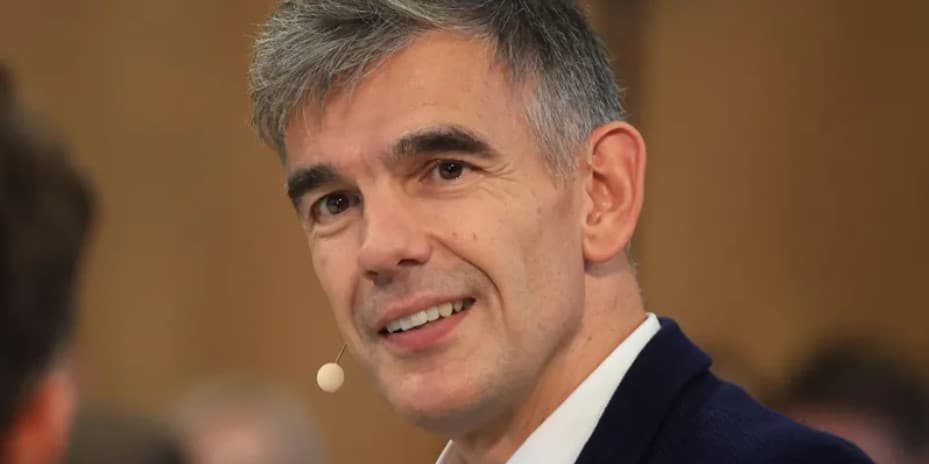
- Matt Brittin BBC Director General appointment was confirmed on March 25, 2026, making him the 18th person to hold the role
- He is the first DG in BBC history to arrive without direct television or journalism experience
- He joins on May 18, 2026, with a salary of £565,000 per year, succeeding Tim Davie
- Brittin spent over a decade as President of Google's Europe, Middle East and Africa division and previously worked as a McKinsey consultant
- He is also a former Olympic rower who represented Great Britain at the 1988 Seoul Olympics
- The BBC faces three simultaneous crises: a USD 10 billion Trump lawsuit, Royal Charter renewal in 2027, and a collapsing TV licence fee model
Who Is Matt Brittin, the New BBC Director General?
Matt Brittin BBC Director General is not a name that emerged from broadcasting newsrooms or television studios. He is, by background and career, a technology and business executive whose career arc is defined more by digital platforms than editorial decisions.
Born in Walton-on-Thames, Surrey, Brittin was educated at Hampton School and Robinson College, Cambridge. At Cambridge, he raced in the Oxford-Cambridge Boat Race on three consecutive occasions and was selected for the 1988 British Olympic team in Seoul. A year later, at the 1989 World Rowing Championships in Lake Bled, he was part of the GB Men's Eight that won a bronze medal, beating the United States by just 0.04 seconds in a celebrated finish. That crew included future Olympic champions Tim Foster and Jonny Searle.
After competitive rowing, Brittin moved into business consulting at McKinsey before joining Google in 2007 to run its UK operations. He rose to become President of Google EMEA, a region that accounts for roughly one third of Google's global revenue, a position he held for over a decade before leaving the company in 2025.
He has also served on the board of The Guardian and the Media Trust, giving him credibility in public interest media circles despite the absence of direct newsroom experience.
Why Did the BBC Choose a Tech Executive Over a Media Insider?
The answer lies partly in what the BBC needs and partly in who was willing to take the job.
BBC's past five director generals have all had news or at least media experience before taking the job. However, leaked reports in the British press suggest that the job has become a poisoned chalice, and many of the BBC board's top choices allegedly could not be persuaded to apply.
Against that backdrop, Brittin's candidacy strengthened as the field narrowed. Sources said his candidacy was strengthened by the paucity of other candidates. Brittin, who has served on the board of The Guardian and the Media Trust, is seen by many as a strong voice who can take the BBC into the future as charter renewal approaches, using his tech credentials.
BBC Chair Samir Shah framed the decision in strategic terms. Shah said: "Matt brings to the BBC deep experience of leading a high-profile and highly-complex organisation through transformation. He is an outstanding leader and has the skills needed to navigate the organisation through the many changes taking place in the media market and in audience behaviours."
Media analyst Claire Enders, founder of Enders Analysis, offered a more measured endorsement. She said Brittin would be "more respected" as an outsider, adding that he is "level-headed and will choose his battles wisely."
The Three Crises Waiting for Brittin on Day One
Brittin's arrival on May 18 is not a fresh start. It is an entry into three overlapping crises that his predecessor Tim Davie left unresolved.
Crisis 1: The Trump Lawsuit
The BBC faces a lawsuit from President Donald Trump over a misleading edit in a Panorama documentary that misrepresented his comments. The lawsuit is valued at USD 10 billion and is being filed in Florida. It was this editorial failure that triggered Tim Davie's resignation and the departure of head of news Deborah Turness. Brittin will inherit a corporation still defending this case with no editorial leadership in place.
Crisis 2: The Royal Charter Renewal
The BBC faces a key moment with the renewal of its charter, traditionally renewed once a decade to make sure the BBC keeps up with political and technological changes. The current charter expires in 2027. The government is now considering options for the distribution of TV, which will require upgrading existing infrastructure if the current terrestrial system is to continue into the 2040s. At that point, the BBC ceases to be a broadcaster and becomes a public service content provider, competing not just with powerful streamers like Netflix, but with platforms like YouTube.
Crisis 3: The Funding Model Collapse
Lawmakers are exploring options that would push the BBC to adopt strategies used by streaming services such as Netflix, including a "mixed funding model" that blends licence-fee income with subscriptions and commercial revenue. Due to a crippling combination of inflation, cost of living crisis and the decline of live television viewing, there is an increasing gap between the BBC's budget and its outgoings.
What Are Critics Saying About a Tech-First BBC Leader?
Brittin's appointment has generated significant debate in British media circles, and the central tension is straightforward: the BBC's last major crisis was editorial, and its new leader has no editorial experience.
Some have flagged his lack of editorial experience, pointing out that editorial dramas were what spelled the end for Davie. It is anticipated that Brittin will hire a deputy DG, someone who could have news experience. He also needs to cement a new head of news to replace Deborah Turness.
Professor Steven Barnett of the University of Westminster, writing in The Conversation, noted the structural logic of the appointment but raised the same concern. A tech background like Brittin's will arguably help the BBC in the new competitive environment. But he will need an experienced deputy with the kind of journalistic background required to deal with the inevitable editorial controversies that the BBC will face.
There is also historical baggage from Brittin's Google years that critics have surfaced. In 2013, Margaret Hodge MP, chair of the Public Accounts Committee, accused Google's UK division under Brittin of being "calculated and unethical" over its use of highly contrived and artificial distinctions to avoid paying billions of pounds in corporation tax owed by its UK operations. Brittin and Google were accused by the committee of being "evil" for not paying its "fair amount of tax."
That history creates an obvious irony: the man now leading the BBC, which is funded by a form of compulsory public contribution, spent years at a company that was publicly accused of avoiding its own compulsory public contributions.
Brittin's Own Words: What Is His Vision for the BBC?
Brittin himself acknowledged the weight of the moment in his acceptance statement. He said he was honoured to be appointed at "a moment of real risk, yet also real opportunity," adding: "Now, more than ever, we need a thriving BBC that works for everyone in a complex, uncertain and fast-changing world."
Those words reflect the tone of a leader who has studied the brief carefully. The phrase "moment of real risk" is not standard corporate optimism. It is an explicit acknowledgment that the BBC's survival in its current form is not guaranteed.
The BBC said Brittin also intends to appoint a deputy director-general. That search, combined with the appointment of a new head of news, will define whether Brittin builds an editorial safety net around himself or attempts to govern editorial decisions with his technology and management lens alone.
Why This Appointment Matters Beyond the BBC
The Matt Brittin appointment is significant not just for British broadcasting but as a signal about where public media institutions globally believe their future lies.
For decades, public broadcasters have been led by journalists and programme-makers who understood editorial risk from the inside. The appointment of a technology executive to the world's most prominent public broadcaster reflects a structural belief: that the existential threat to the BBC is digital disruption, not editorial failure.
Whether that diagnosis is correct will be tested in real time. Brittin joins as the BBC faces content competition from Netflix, YouTube, and Amazon Prime, a funding model that regulators across Europe are questioning, and a lawsuit that has already cost two senior leaders their jobs.
He inherits all of it on May 18.
Conclusion: Matt Brittin as BBC Director General Signals a Turning Point
The Matt Brittin BBC Director General appointment, confirmed on March 25, 2026, marks the most significant strategic shift in BBC leadership in a generation. It is the first time a technology executive with no journalism background has been handed editorial and operational control of a broadcaster serving half a billion people globally.
His Google EMEA experience, McKinsey consulting background, and public media board roles give him credibility as a transformation leader. His lack of editorial experience, the open Trump lawsuit, and the approaching charter renewal give his critics legitimate grounds for scrutiny.
The BBC's 18th Director General starts with a mandate to modernise, a newsroom in transition, a funding crisis unresolved, and a world watching. That is the job.