

The Claim
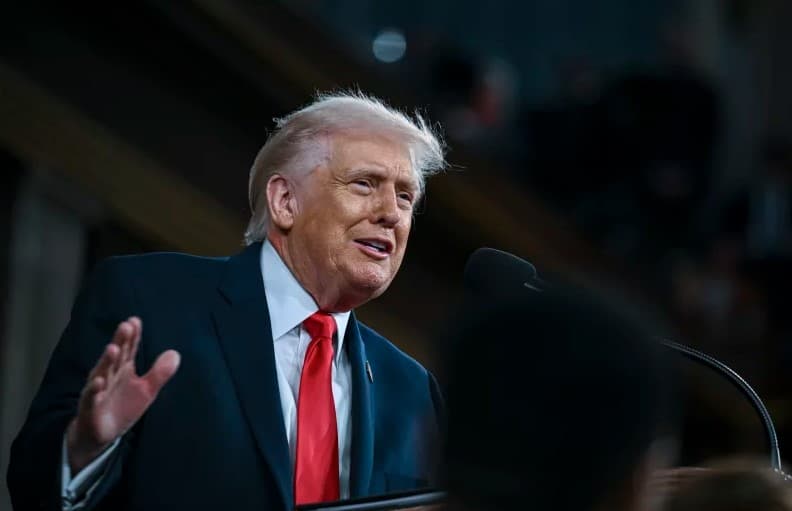
Who made it: President Donald Trump, in multiple speeches, interviews, a Wall Street Journal op-ed, his 2026 State of the Union address on February 24, and again in his April 1, 2026, address to the nation about the Iran war.
What he said: Trump cited "record-setting investments coming into the United States, over $18 trillion" since he returned to office in January 2025, attributing the figure to his trade and tariff policies.
The progression of the claim: Trump did not arrive at $18 trillion suddenly. He claimed $3 trillion on the day after his inauguration. By May 2025 he said the figure was "close to $10 trillion." By October 2025, he first cited $18 trillion. By November 2025, he had raised it to "nearly $20 trillion." By April 2026, the $18 trillion figure appears as a standard talking point in official addresses.
Our Verdict
Claim | Rating |
|---|---|
US secured $18 trillion in investments since January 2025 | FALSE |
White House documents $9.6 to $10.5 trillion | PARTLY TRUE but still exaggerated |
All listed investments are new and Trump-attributable | MISLEADING |
Foreign country pledges represent actual investment | MISLEADING |
The figure was validated by White House economists | FALSE |
Overall verdict: FALSE to MISLEADING. The $18 trillion figure has no documented basis. The White House's own lower figure of $9.6 to $10.5 trillion is itself a significant exaggeration of actual investment commitments.
What the Evidence Actually Shows
The White House Itself Lists a Much Lower Number
The most direct refutation of the $18 trillion claim comes not from Trump's critics but from Trump's own administration.
As of the night of Trump's State of the Union address on February 24, 2026, the White House's own website said the figure for "major investment announcements" during the Trump term was $9.7 trillion. The AP fact-check on April 1, 2026, found the White House website had updated the number to $10.5 trillion. Trump's cited figure of $18 trillion was approximately double what his own administration had officially documented, without any explanation for the discrepancy.
Trump has presented no evidence that he has secured this much domestic or foreign investment in the US. The figure appears to be exaggerated, highly speculative and far higher than the actual sum.
No White House economist, Treasury official, or Commerce Department analyst has ever published a methodology that produces the $18 trillion number. As the Cato Institute noted, this totally imaginary $18 trillion political talking point continues to be repeated endlessly in the hope that nobody in the public or press would ever be brave enough to rudely ask for some explanation or shred of evidence.
The White House's Own $9.6 Trillion Figure Is Also Inflated
Even accepting the White House's lower official figure at face value, independent analysis found it does not withstand scrutiny.
The White House website documents $9.6 trillion, and not everything cited on the website was newly pledged during Trump's second term. Experts say there is no guarantee the full amounts promised will come to fruition, and some of this investment would have occurred regardless of who was president.
PolitiFact and Al Jazeera's detailed review of the ten largest items on the White House list found significant problems with how they were categorised.
The largest single entry was a pledge from the United Arab Emirates of $1.4 trillion. The UAE's 2024 gross domestic product was $537 billion, making the pledge equal to three years of the country's entire economic output. Experts say a commitment of that scale is inherently speculative, not a confirmed investment ready for deployment.
A January 2026 study raised doubts about whether more than $5 trillion in investment commitments made last year by many of America's biggest trading partners will actually materialise and questioned how it would be spent even if it did.
Actual Foreign Direct Investment Data Contradicts the Narrative
The strongest single piece of evidence against the $18 trillion claim is the actual Foreign Direct Investment data published by the US government.
Foreign direct investment was recorded at a feeble annual rate of only $265.9 billion in the first three quarters of 2025, according to St. Louis Federal Reserve data. This is not a matter of interpretation. It is the measured flow of actual capital into the US economy.
If $18 trillion were genuinely flowing into the US as new foreign investment, it would require foreigners to acquire an extra $18 trillion in US dollars to finance new US plant and equipment, either by selling far more to Americans than they buy or by selling massive amounts of foreign assets. This is demonstrably not happening.
Foreign direct investment grew 23% more rapidly during the Biden years, 2021 to 2024, than it did in the first three quarters of 2025.
Biden-Era Commitments Included in the Count
Multiple independent reviewers found that the White House list counts investments that were announced during the Biden administration or represent continuations of pre-existing corporate plans.
Apple, Meta, NVIDIA, Microsoft, Google, Micron, and IBM are among the companies whose investment announcements appear on the White House list. Many of these companies were already executing multi-year capital expenditure plans, data centre expansions, and chip manufacturing investments that were announced under or initiated during the Biden administration.
CNN's detailed review in October 2025 found the White House was counting trillions of dollars in vague investment pledges, pledges that were about bilateral trade or economic exchange rather than investment in the US, and vague statements that did not even rise to the level of pledges.
A study published by Bloomberg Economics found the White House total included more than $2.5 trillion in non-investments, $3.5 trillion in opaque sovereign pledges, and corporate announcements that represented only slight increases on previous plans.
The Specific Numbers Compared
Source | Figure | Assessment |
|---|---|---|
Trump (State of the Union, Feb 24, 2026) | $18 trillion | No documentary basis |
Trump (Iran address, Apr 1, 2026) | Over $18 trillion | No documentary basis |
White House official webpage (Apr 2026) | $10.5 trillion | Includes speculative, multi-year, and Biden-era items |
White House official webpage (Dec 2025) | $9.6 trillion | Includes speculative and non-investment pledges |
Actual US foreign direct investment (2025, annualised) | $265.9 billion | Verified Federal Reserve data |
Bloomberg Economics adjusted estimate | Approximately $7 trillion (maximum, with significant caveats) | Many items "not firm, waiting for tariffs" |
PolitiFact finding on unverifiable pledges | Over $5 trillion in doubt | January 2026 independent study |
Why This Claim Pattern Matters
The Figure Has Grown Repeatedly Without New Evidence
The most analytically important aspect of this fact-check is not any single data point. It is the pattern of escalation without evidence.
Trump claimed $3 trillion on his first day back. He claimed $10 trillion in May. He claimed $18 trillion in October. He claimed $20 trillion in November. Each upward revision came with no new disclosed methodology, no new verified commitment list, and no independent validation from his own economic agencies.
In the absence of documentation, the number appears to function as a rhetorical device rather than a factual claim. Each time the figure is challenged, it grows larger rather than being substantiated.
FactCheck.org's senior economist Adam Hersh stated: "There is no guarantee that any of the investments that are announced actually come to fruition."
Reshoring expert Harry Moser, who is broadly supportive of the administration's manufacturing goals, placed the maximum credible manufacturing project announcement figure at approximately $20 trillion before noting that Bloomberg reduced it to $7 trillion, adding that much of that amount is still not firm, waiting for tariffs to become solid and long-term.
What Would Make This Claim Verifiable
A verifiable investment claim would require four things that the Trump administration has not provided: a published methodology explaining what counts as an investment and what does not, a list that separates new commitments from Biden-era announcements, evidence that speculative country pledges represent genuine capital commitments rather than diplomatic statements, and verification that the amounts cited match the actual Foreign Direct Investment flows recorded by the Federal Reserve and Bureau of Economic Analysis.
None of these has been produced. The claim has been repeated across the State of the Union, a Wall Street Journal op-ed, cabinet meetings, and an April 1 national address without any of these substantiating elements appearing.
Conclusion
The Trump administration's $18 trillion investment claim is false as stated. The figure is approximately double what the White House's own official tracker documents, and that lower figure is itself significantly exaggerated by including speculative sovereign pledges, bilateral trade agreements, and corporate investment plans that predate the current administration.
The real, measured flow of foreign direct investment into the US in 2025 was approximately $266 billion annualised, a significant amount, but roughly 67 times smaller than the $18 trillion figure being claimed.
The claim fails on its own administration's evidence, on independent economic analysis, and on directly measured capital flow data.
Fact-Check Rating:
- TRUE: Accurate and verifiable
- MOSTLY TRUE: Broadly accurate with caveats
- PARTLY TRUE: Some accurate elements alongside inaccuracies
- MISLEADING: Creates a false impression
- FALSE: Factually unsupported
This claim: FALSE to MISLEADING