

INTRODUCTION
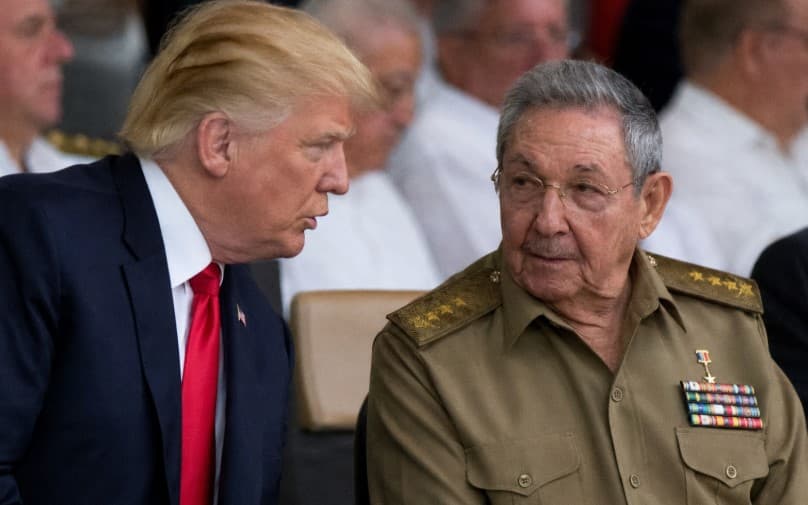
When the Trump administration secured a federal indictment against Raúl Castro on drug trafficking charges, it did more than target a 94-year-old former Cuban leader. It fired a political signal heard across the Western Hemisphere. The move revived Cold War-era antagonism between Washington and Havana, resetting a diplomatic relationship that had taken decades of painful negotiation to partially repair. For analysts watching US foreign policy under Donald Trump, this was less a law enforcement action and more a strategic declaration.
What Happened
The US Justice Department, under the Trump administration, indicted Raúl Castro, the former Cuban president and long-serving defence minister, on charges related to drug trafficking and support for narco-terrorism. The indictment named Castro alongside senior Cuban military and intelligence officials, alleging that the Cuban state facilitated drug shipments to the United States. Havana rejected the charges as politically motivated fabrications. The timing, coming amid broader Trump-era pressure campaigns on socialist governments in Latin America, was not incidental.
Why This Matters Beyond Headlines
Indicting a sitting or former head of state is a rare instrument in American foreign policy. It signals that Washington views the Cuban government not merely as an ideological adversary but as a criminal enterprise deserving of the same legal treatment applied to cartel networks. This framing is significant. It forecloses the kind of quiet diplomacy that the Obama administration pursued through back-channel negotiations, and it creates legal and symbolic barriers to any future normalization.
The deeper structural issue is that Cuba sits at the intersection of multiple US foreign policy anxieties: Russian military presence in the Caribbean, Venezuelan oil politics, Chinese port infrastructure interest, and migration flows from the island that carry direct electoral weight in Florida. Targeting Castro checks several boxes simultaneously without requiring military commitment.
Political and Strategic Calculations
For Donald Trump, the Cuba indictment serves a clear domestic constituency. Cuban-American voters in Florida, a perennial swing state, respond strongly to hardline postures toward Havana. The Republican Party has long used Cuba policy as a loyalty signal to this community. But the calculation extends beyond electoral arithmetic.
By framing Cuba as a narco-state, the Trump administration aligns its Cuba policy with its broader messaging on drug trafficking and border security. It positions aggressive Cuba policy as an extension of domestic concerns rather than ideological Cold War revival, which makes the stance harder for critics to dismiss as nostalgic geopolitics.
Raúl Castro's age adds another layer. Targeting a 94-year-old who no longer formally governs carries a message that transcends the individual. It communicates that Washington intends to hold the entire post-revolutionary Cuban institutional structure accountable, not merely its current officeholders.
Economic and Security Impact
Cuba's economy, already battered by prolonged sanctions, remittance restrictions, and post-pandemic collapse in tourism, has little capacity to absorb further pressure. The indictment strengthens the legal basis for expanding financial sanctions against Cuban state entities, potentially tightening the island's access to third-party banking and trade. European companies doing business with Cuba face renewed pressure under extraterritorial US sanctions architecture.
On the security dimension, a cornered Cuban government historically leans further into alliances with Moscow and Beijing. Any escalation that accelerates that alignment creates new surveillance and intelligence concerns for the United States in its immediate neighbourhood.
Global Reactions and Diplomatic Signals
Latin American governments reacted with measured alarm. Mexico, Colombia, and Brazil expressed concern about the precedent of judicial targeting of foreign leaders. The Caribbean Community issued cautious statements calling for dialogue. Globally, the indictment reinforced perceptions that Trump's foreign policy apparatus treats legal instruments as extensions of geopolitical pressure rather than neutral judicial processes.
Russia and China offered predictable rhetorical support to Havana while using the moment to strengthen their narrative that US institutions are weaponised against sovereign nations.
What Happens Next
Three scenarios are plausible. In the first, the indictment remains largely symbolic, intensifying sanctions rhetoric without producing Cuban capitulation. In the second, tightening financial pressure accelerates internal economic deterioration in Cuba, potentially triggering migration surges that then create new political problems for Washington. In the third, Cuba deepens military and intelligence cooperation with Russia or China in response, creating a renewed Caribbean security dilemma the United States will struggle to contain without significant diplomatic costs.
CONCLUSION
The Raúl Castro indictment is unlikely to produce a democratic transformation in Cuba. What it will produce is a colder, more legally entrenched form of hostility that limits Washington's future strategic options in the Caribbean. Cold War politics never fully disappeared from US-Cuba relations. Under Donald Trump, they have been reissued in new legal packaging. Whether that serves long-term American interests in Latin America remains the real question that history will eventually answer.