

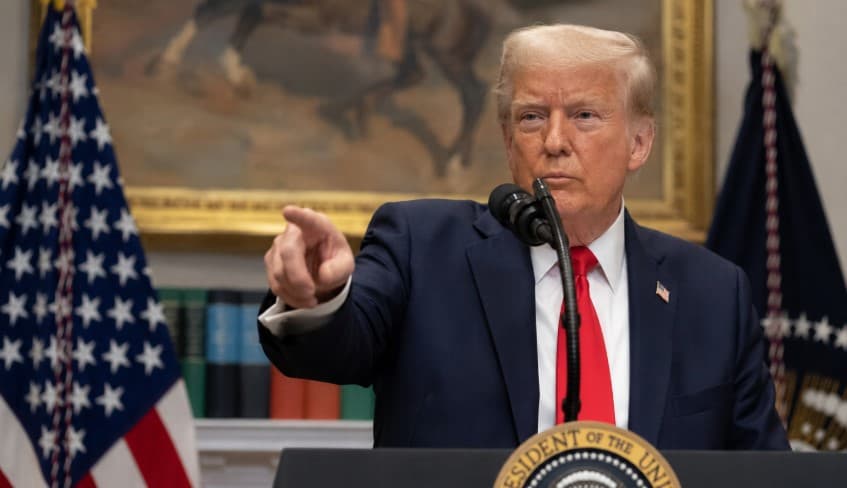
The Trump administration's ultimatum to Iran is not a negotiating tactic. It is a symptom of a diplomatic process that was never built on mutual concessions. As talks over the Trump Iran nuclear deal collapse into public threats and counter-accusations, the real casualty is not just a ceasefire. It is the credibility of American coercive diplomacy in a conflict that has already reshaped Middle Eastern security architecture.
What Happened
Following weeks of ceasefire negotiations brokered partly through Pakistan, US-Iran talks have reached what Iranian officials are calling a potential impasse. Trump posted on Truth Social warning Iran the "clock is ticking," threatening obliteration if Tehran does not accelerate agreement. Iran's response has been a list of demands Washington considers non-negotiable: an end to hostilities against Hezbollah in Lebanon, a halt to the US naval blockade of Iranian ports, sovereignty guarantees over the Strait of Hormuz, and compensation for war damages. Washington has countered with demands that Iran consolidate its nuclear operations to a single site and transfer enriched uranium to American custody.
Why This Matters Beyond the Headlines
The structural problem here is not one of communication. It is a fundamental mismatch in what each side believes it has already conceded. Iran views its acceptance of a ceasefire as a major opening. Washington views it as the minimum threshold for conversation. This asymmetry means no mediator, not even Pakistan with its credible relationships on both sides, can bridge a gap rooted in opposing definitions of leverage.
Trump's reported willingness to accept a 20-year suspension of Iran's nuclear programme, rather than total dismantlement, represents the first genuine shift in the American position. But it arrived alongside threats of annihilation, which strips the concession of diplomatic value. Signals sent simultaneously in opposite directions cancel each other out.
Political and Strategic Calculations
Iran's insistence on Strait of Hormuz sovereignty is not about geography. It is about institutional survival. The Islamic Republic needs to demonstrate to a domestic audience, and to regional partners, that it extracted meaningful concessions from a military confrontation with the United States and Israel. Accepting American nuclear terms without a visible political win would be internally destabilizing.
For Trump, the calculation is different. With a presidential legacy intertwined with pressure campaigns, any deal that resembles a compromise risks being framed domestically as weakness. His phone call with Netanyahu, reported hours after his Truth Social post, signals that Israeli strategic interests remain deeply embedded in American negotiating constraints. Netanyahu's government has consistently opposed any arrangement that leaves Iranian nuclear infrastructure partially intact.
Economic and Security Impact
The most immediate consequence of continued stalemate is energy market instability. Iran's effective control over the Strait of Hormuz, through which roughly one-fifth of global oil and liquefied natural gas flows, has already driven prices upward across international markets. A prolonged impasse, or worse, a return to active hostilities, would extend that pressure into supply chain disruptions affecting Asia, Europe, and energy-importing economies across the Global South.
The US naval blockade of Iranian ports has its own escalatory logic. It suppresses Iranian export revenue but also restricts humanitarian and commercial shipping in ways that build regional resentment and create legal gray zones under international maritime law.
Global Reactions and Diplomatic Signals
China and Russia have remained notably quiet in public, which itself is a signal. Both benefit from extended American entanglement in the region and from elevated oil prices that support their own fiscal positions. Europe has issued measured calls for diplomacy without offering substantive engagement, revealing the limits of European strategic autonomy in a conflict where it holds few cards.
Pakistan's mediating role is significant but fragile. It brings geographic proximity and working relationships with both Tehran and Washington, but it has no enforcement capacity and no leverage if either side chooses confrontation over concession.
What Happens Next
Three scenarios are credible. First, a narrow technical agreement on nuclear monitoring that both sides can present as a victory. Second, a collapse of talks followed by resumed hostilities and severe energy market disruption. Third, a prolonged frozen conflict in which the ceasefire holds nominally while economic pressure and proxy confrontations continue. The third scenario is historically the most common outcome of conflicts structured like this one.
Conclusion
The Trump Iran nuclear deal crisis is not simply a diplomatic failure. It reflects deeper structural tensions in how Washington uses military and economic coercion as its primary tools of engagement. When the only language on offer is escalation, adversaries tend to find reasons to hold firm. Iran has domestic constraints, energy leverage, and regional allies. The clock Trump invokes may be ticking for both sides.