

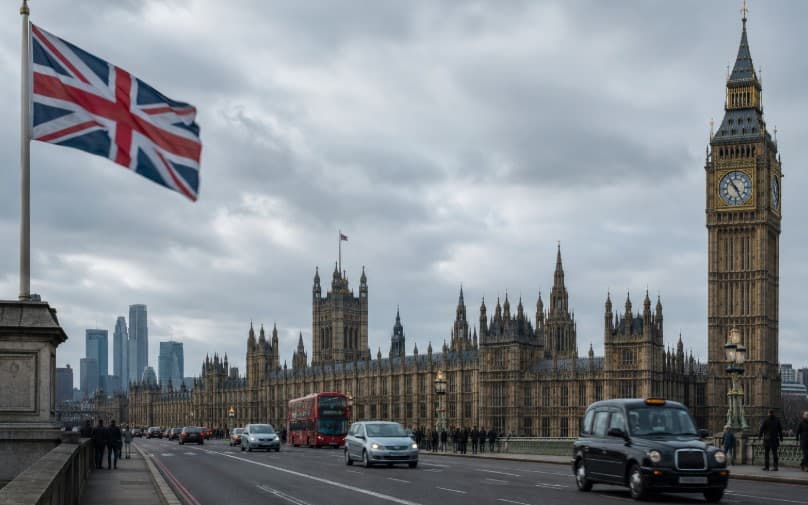
Britain is confronting an economic scenario that central banks dread above almost all others. The UK is now facing the toxic mix of slowing growth and rising prices, the exact scenario that strips policymakers of their most reliable tools. This is not a cyclical downturn. It is a structural collision between chronic inflation and weakening demand, and the fallout will shape British economic policy for years.
What Happened
The UK economy contracted in the first quarter of 2025 while inflation remained stubbornly above the Bank of England's 2% target. GDP data confirmed the economy shrank, even as household energy bills, food prices, and services costs continued rising. This simultaneous occurrence of economic contraction and persistent inflation is the textbook definition of stagflation, a condition that last gripped Britain during the 1970s oil crisis era and proved deeply damaging.
Why This Matters Beyond the Headlines
Stagflation is uniquely dangerous because it neutralizes the standard economic toolkit. When growth slows, central banks normally cut interest rates to stimulate borrowing and spending. When inflation rises, they raise rates to cool the economy. When both crises arrive together, neither option works cleanly. Cutting rates risks inflaming inflation further. Raising rates risks deepening the recession. The Bank of England is caught between two fires with no clean exit.
This is not simply bad luck. The UK entered this trap through a convergence of structural vulnerabilities: post-Brexit trade friction that raised import costs, an energy market heavily exposed to global commodity price volatility, and a labor market where wage growth accelerated faster than productivity. Each factor added inflationary pressure even as consumer confidence collapsed and business investment dried up.
Political and Strategic Calculations
For the Labour government, stagflation represents a serious political threat. The administration inherited an economy already under strain, but declining GDP alongside rising prices makes credible economic management far harder to project. Public tolerance for austerity is low after years of cost-of-living pressure. Wage demands from public sector unions will intensify if real incomes keep falling, increasing fiscal pressure on a government already navigating tight spending limits.
Politically, stagflation tends to destroy governing credibility regardless of origin. Voters rarely distinguish between inherited and self-inflicted economic pain. The Conservatives, despite their own record of economic missteps, will use every GDP contraction figure as a political weapon.
Economic and Market Impact
Financial markets have already priced in a prolonged period of policy uncertainty. Sterling has remained under pressure as investors reassess UK asset valuations. Gilt yields reflect a bond market unconvinced that the Bank of England can deliver a clean soft landing. Business investment surveys show continued hesitation, with firms reluctant to commit capital in an environment where both demand signals and financing costs remain unstable.
Consumer spending, which drives over 60% of UK economic activity, is being squeezed from both sides. Wages are rising in nominal terms, but real purchasing power continues eroding. Mortgage holders on variable rates and those refinancing fixed-rate deals face sharply higher costs. Discretionary retail, hospitality, and construction are absorbing the most visible damage.
Global Reactions and Diplomatic Signals
The International Monetary Fund has already flagged UK growth risks in its recent forecasts. European trading partners are watching the situation closely, given the UK's role as a significant consumer market. A prolonged British recession would dampen demand for EU exports at a moment when Germany itself is navigating industrial stress. Internationally, the UK's stagflation episode reinforces growing concerns that high-debt, post-pandemic economies have not fully purged structural inflation.
What Happens Next
Three scenarios are plausible. In the first, the Bank of England holds rates and accepts persistent above-target inflation while hoping growth recovers organically, a gamble that risks embedding inflationary expectations. In the second, it cuts rates despite elevated prices to prevent a deeper recession, risking a credibility loss that could push inflation higher. In the third, the government deploys targeted fiscal support to protect demand without adding broad inflationary fuel, a narrow path requiring precise policy execution that British institutions have not recently demonstrated.
The Bigger Picture
Stagflation is not merely an economic inconvenience. It exposes the limits of institutions that built their reputations on the assumption that inflation and recession rarely coexist. For Britain, this moment is also a mirror, reflecting the accumulated cost of unresolved structural weaknesses. The 1970s stagflation crisis eventually forced a painful rethinking of economic orthodoxy. Whether this episode demands a similar reckoning depends on whether policymakers treat the symptoms or confront the underlying fractures.