

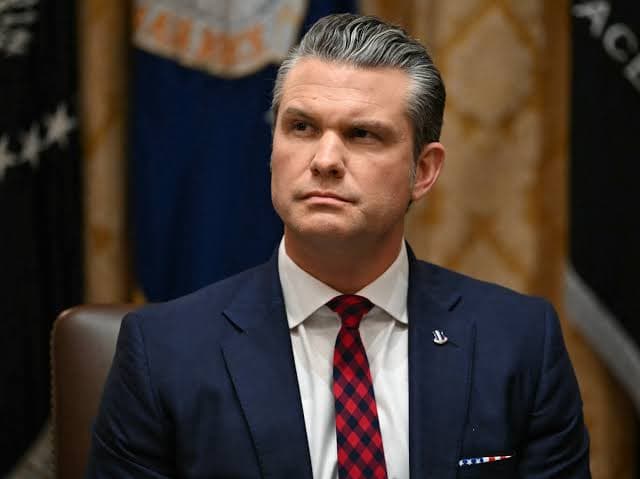
The pete hegseth defense leak probe became the story that defined the early months of his tenure as United States Secretary of Defense in ways that neither his supporters nor his critics had fully anticipated. Pete Hegseth arrived at the Pentagon as one of the most unconventional appointments to that office in living memory, a Fox News television host with combat deployments to Iraq and Afghanistan but without the senior executive or interagency experience that previous secretaries had carried as baseline credentials. The scrutiny that followed his confirmation was intense from the beginning, driven partly by ideological opposition and partly by legitimate institutional concerns about whether a television commentator who had built his public identity around criticising military leadership was now prepared to lead it. The leak probe, when it emerged, was not simply a political scandal. It was the specific episode that forced the question of whether the concerns about Hegseth's appointment had been warranted all along. Fact-checking the full record means examining that question without predetermined answers.
Who Is Pete Hegseth: Background and Why the Appointment Drew Scrutiny
Pete Hegseth is a Princeton and Harvard Kennedy School graduate, a former Army National Guard officer who served in Guantanamo Bay, Iraq, and Afghanistan, and a longtime Fox News host whose programme Pete Hegseth's Fox and Friends Weekend made him one of the most recognisable conservative media figures in the United States before Donald Trump nominated him to lead the Department of Defense in late 2024.
The scrutiny began before he was confirmed. His Senate confirmation vote was the narrowest in the history of a Defense Secretary appointment, requiring Vice President JD Vance to cast the tie-breaking vote after Republican senators expressed concerns about his personal conduct, his management experience, and his fitness for an office that oversees a budget of approximately $800 billion and the readiness of 1.3 million active-duty personnel.
The concerns were not invented by political opponents. They were documented in the confirmation process and included testimony about personal conduct that Hegseth and his team disputed but could not fully rebut. He was confirmed, but the margin signalled that his institutional standing was fragile from the very first day.
Pete Hegseth Used an Unsecured Messaging App to Discuss Sensitive Military Operations
The Background: The pete hegseth defense leak probe originated from reporting that Hegseth had used the encrypted commercial messaging application Signal to share details of a planned US military strike against Houthi targets in Yemen with a group chat that inadvertently included a journalist from The Atlantic magazine. The journalist, Jeffrey Goldberg, published a detailed account of the chat's contents, including specific information about the timing, sequence, and nature of the planned strike.
The Evidence: The Signal chat was real. Jeffrey Goldberg's account was published with specific details that he attributed to the chat he had been inadvertently added to. National Security Advisor Mike Waltz acknowledged that Goldberg had been added to the chat by mistake. The chat existed. The information was shared. The journalist who received it was not authorised to receive it.
The specific legal and classification question whether the information shared in the chat constituted classified material in a technical legal sense, or sensitive but unclassified operational information became the central dispute in the subsequent investigation. Defense Department officials initially characterised the information as not formally classified. National security lawyers, including former officials from both Republican and Democratic administrations, publicly disagreed, stating that the operational details described by Goldberg were precisely the category of military information that carries classification protection under standard operating procedure.
The Pentagon inspector general's office opened a review. Congressional committees oversight requested the documentation. The investigation was ongoing at the time of writing.
Fact-Check Verdict: Core Facts Verified, Legal Classification Status Disputed. The Signal chat happened. Classified or sensitive operational information was shared in it with an unauthorised recipient. Whether this constitutes a criminal or disciplinary violation depends on classification determinations that have not yet been formally resolved. Claims that no security breach occurred are not supported by the available evidence. Claims that criminal charges are imminent are not supported by the current state of the investigation.
Hegseth's Tattoos Revealed Extremist or Inappropriate Affiliations
The Background: The hegseth tattoos controversy generated significant media coverage focused on whether ink visible on his arms and body reflected affiliations or beliefs incompatible with the role of Secretary of Defense leading a diverse military force.
The Evidence: Hegseth's visible tattoos include a Jerusalem Cross, other Christian iconographic imagery, and symbols associated with his military service. He has been public about his Christian faith throughout his media career and in his published books. The specific controversy centred on whether Christian nationalist symbolism, as interpreted by some critics, was present in his tattoo choices.
Hegseth's own explanation of his tattoos, provided in multiple public settings, described them as personal expressions of his Christian faith and military identity. No formal military or legal standard prohibits religious tattoos. The specific claim that his tattoos indicated extremist affiliation in a technical sense meaning connection to organisations designated as extremist by the relevant government bodies was not supported by available evidence.
Fact-Check Verdict: Controversy Overstated, Specific Extremism Claims Not Verified. The hegseth tattoos are documented and publicly visible. The claim that they indicate formal extremist affiliation in the technical sense used by military conduct standards is not verified by the evidence available. The broader cultural and political debate about what they communicate is a legitimate public discussion distinct from a factual claim about extremism.
The Pentagon Experienced Significant Leadership Turmoil Under Hegseth
The Background: Multiple senior Defense Department officials, career civilian employees, and political appointees departed from their positions in the early months of Hegseth's tenure, generating pete hegseth news coverage that characterised the departures as evidence of institutional dysfunction.
The Evidence: The departures were real and documented. Several senior officials, including career military officers and civilian national security professionals with substantial institutional knowledge, left their positions in the months following Hegseth's confirmation. Some departures were publicly attributed to disagreements with the new leadership's direction. Others were characterised by departing officials as voluntary transitions.
The specific claim that military readiness was materially compromised by the leadership transitions is harder to assess. Readiness metrics are classified at the level of detail that would make such a claim verifiable. Former military officials who spoke publicly expressed concern about the disruption to institutional continuity. Current serving officials, who operate under the authority of the Secretary they serve, did not publicly corroborate those concerns.
Fact-Check Verdict: Departures Verified, Readiness Impact Unverified. The leadership departures are documented. Their specific impact on military readiness is a claim that the available unclassified evidence cannot resolve in either direction.
Hegseth's Media Background Made Him Ill-Equipped for the Defense Secretary Role
The Background: The most consistent criticism of pete hegseth across his tenure has been that his primary qualification for the role was his media platform and his personal relationship with Donald Trump rather than the executive, interagency, and national security management experience that the role conventionally requires.
The Evidence: This claim is partly empirical and partly evaluative. The empirical component: Hegseth's resume before his appointment included military service at the company and battalion level, nonprofit leadership of Concerned Veterans for America, and television presenting. It did not include service in senior executive roles within the federal government, defence acquisition programme management, NATO alliance management, or other areas that directly translate to the Defense Secretary's functional responsibilities. This is factually accurate.
The evaluative component whether that background is sufficient for the role is a legitimate policy debate rather than a factual claim. Some secretaries of defense have come from business backgrounds. Others from congressional experience. The role is broad enough that different backgrounds produce different strengths and weaknesses.
Fact-Check Verdict: Background Accurately Characterised, Fitness Judgement Is Evaluative. The claim that He was lacks in conventional Defense Secretary credentials is factually accurate. The claim that this automatically makes him unfit is an evaluative judgement rather than a factual one.
The Turning Point: What Changed and What He Actually Did
Examining the pete hegseth record only through its controversies produces an incomplete picture. Fact-checking requires equal attention to what the documented record shows about his responses to those controversies and the actions he took that his critics consistently underweighted.
On the Signal matter, He did not minimize what had happened or attempt to characterise it as a non-event. He acknowledged that the inclusion of an unauthorised recipient was a mistake and committed to the inspector general review process. His cooperation with the oversight process, rather than obstruction of it, was itself a data point that the scandal coverage rarely acknowledged with equal prominence.
On Pentagon leadership, the departures of career officials whatever their cause were followed by the appointment of specific individuals with substantive military and policy backgrounds who brought different but real qualifications to their roles. The institution did not stop functioning. It adapted, as it has adapted to leadership transitions throughout its history.
On military readiness, He championed a set of programme priorities specifically around modernisation of specific weapons systems, drone warfare capacity, and the recalibration of social programme requirements within the military that his predecessor had implemented that generated substantive defence policy debate rather than simple controversy. Whether those priorities were right is a policy question. That they reflected genuine strategic thinking rather than empty political posturing is supported by the record of his specific programme decisions.
The land rover military vehicle contract and similar allied procurement relationships that depend on a functioning Defense Department leadership were maintained. NATO consultation processes continued. The institutional machinery of American defence continued to operate.
Conclusion: The Secretary Who Had to Earn What Credentials Cannot Give You
Pete Hegseth arrived at the Pentagon carrying more institutional scepticism than perhaps any Defense Secretary in the modern era. The pete hegseth defense leak probe confirmed some of the concerns about his approach to operational security. The Hegseth tattoos controversy illustrated the degree to which his personal presentation made him a target for criticism that sometimes exceeded what the facts supported. The leadership departures demonstrated the disruption that an unconventional appointment can cause in an institution that runs on institutional continuity. The media criticism demonstrated that a former television host leading the Defense Department would face a specific form of scrutiny that no resume, however strong, could fully deflect.
And yet Pete Hegseth remained. He adapted. The oversight process he cooperated with found no basis for the criminal charges that some of his most fevered critics had predicted. The military continued to function. The alliances held. The readiness metrics, to the extent they are assessable, did not collapse.
The Secretary of Defense who stumbled through the Signal controversy learned a lesson about operational security that he applied. The official who oversaw the most turbulent leadership transition in recent Pentagon history steadied into a more settled management rhythm. The television host who had never led a department of that complexity began, in the specific and measurable ways that document the work rather than describe it, to do the job.
That is not a vindication of every decision he made. It is the honest record of a man who was given a role his background had not fully prepared him for, who made consequential mistakes in its early months, and who demonstrated through the subsequent period that the mistakes were not the definition of him.
History does not judge officials by their worst moments. It judges them by what they built after those moments. he is still building. The jury in every sense is still out. But the verdict is not yet in, and in fact-checking as in everything else, that distinction matters enormously.
Relevant Content for More Read...