

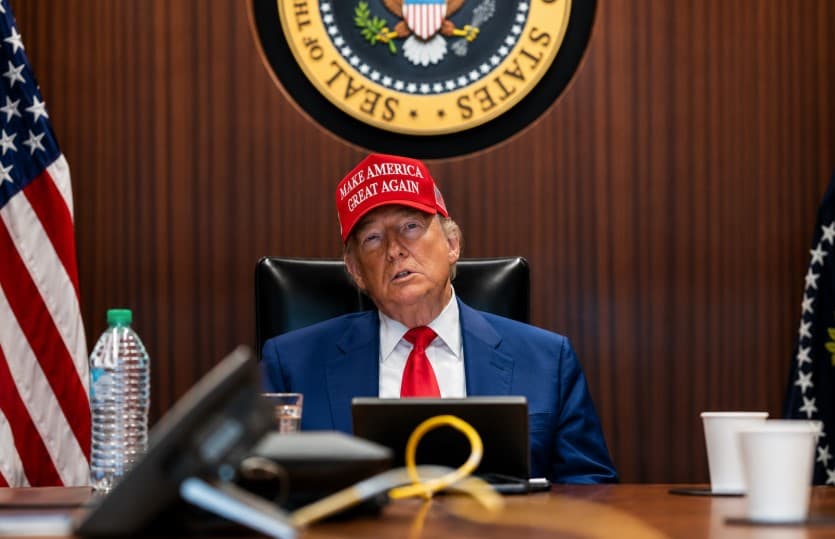
When the White House Situation Room emptied on Friday without a deal, the world received not a failure but a signal. The US-Iran nuclear deal in 2026 is not simply about atomic weapons. It is about which power writes the rules for the next chapter of Middle Eastern order, and who blinks first.
What Happened
US and Iranian negotiators reached a tentative 60-day memorandum of understanding to extend the ceasefire and launch negotiations on Iran's nuclear program, but President Trump had yet to give final approval. Trump then convened a Situation Room meeting to make what his team called a "final determination," but it concluded without clarity on the path forward. The memorandum as drafted would require Iran to allow unrestricted shipping through the Strait of Hormuz and remove all mines from the waterway within 30 days. Iran's foreign ministry, meanwhile, stated it was "focused on ending the war" and explicitly denied that nuclear negotiations were on the table.
Why This Matters Beyond Headlines
During the war, Iran effectively closed the Strait of Hormuz, through which approximately one-fifth of the world's traded oil and natural gas flows, sending global energy prices skyrocketing. This is not a regional dispute. Every economy that runs on imported energy, from Japan to Germany to India, has a direct stake in what Washington and Tehran decide in the next 60 days.
The deeper issue is structural. Iran had insisted it must retain the right to enrich uranium, while the US has long demanded it stop producing highly enriched uranium and dispose of its existing stockpile. These are not positions that split the difference easily. They reflect fundamentally incompatible threat perceptions.
Political and Strategic Calculations
One senior Iran and oil analyst at the Eurasia Group assessed that the emerging deal was "overall a victory for Iran," noting that none of the Trump administration's stated war goals, including regime change, a sweeping nuclear agreement, or forcing the strait open unilaterally, were achieved. Iran endured weeks of strikes, kept the strait closed, and is now negotiating its reopening on its own terms.
For Trump, the political calculus is different. A ceasefire extended without a nuclear resolution allows him to claim progress while avoiding a messy, unverifiable arms-control agreement before domestic audiences. Trump himself said "most points were agreed to, but the only point that really mattered, nuclear, was not," describing Iran as "unyielding." That framing preserves his leverage domestically while keeping the pressure on Tehran.
Iran's chief negotiator was equally blunt. He stated publicly that his country has "no trust in guarantees or words, only actions," and that "the winner of any agreement is the one who is better prepared for war the day after." This is not diplomatic noise. It is a structural signal that Tehran views any deal as temporary positioning, not permanent settlement.
Economic and Security Impact
The energy market consequences have already materialized. Iran holds roughly 441 kilograms of uranium enriched to 60% purity, technically a short step away from weapons-grade levels of 90%, according to the International Atomic Energy Agency. The gap between civilian enrichment and weapons capability has never been narrower, and every week of stalled talks narrows it further. For Gulf states and Asian energy importers, that is both a security risk and an insurance cost embedded in every barrel of oil priced today.
Global Reactions and Diplomatic Signals
The international response reflects deep unease. Iran's Foreign Minister said an agreement was "just inches away" but criticized "maximalist demands" from US negotiators. Meanwhile, US Defense Secretary Pete Hegseth, speaking in Singapore, signaled that American strike capacity remained fully operational, a message aimed not just at Tehran but at Gulf allies and Asian partners watching the negotiations carefully.
Pakistan, which brokered the original ceasefire, has seen its diplomatic role complicated by the widening gap between the two sides. No new talks have been confirmed.
What Happens Next
Three scenarios are credible. First, a narrow deal: both sides accept the 60-day extension, nuclear talks begin without preconditions, and the strait reopens gradually. Second, a collapse: Trump formally rejects the memorandum, the ceasefire expires, and military pressure resumes. Third, strategic drift: the situation freezes without formal agreement or renewed conflict, with the strait partially functional and nuclear talks nominally alive but substantively stalled.
The third scenario is arguably the most dangerous. Since the ceasefire began on 8 April, it has already been violated by both sides. A frozen conflict with enrichment continuing is not stability. It is a countdown.
Conclusion
The empty Situation Room on Friday was not a diplomatic failure. It was a preview of the central strategic contest of the coming decade: whether the United States can construct a durable framework for Iranian nuclear containment without either capitulating to enrichment or returning to open war. The answer, for now, is that neither side is ready to make that choice. But the longer that choice is deferred, the fewer options either side will have left.