

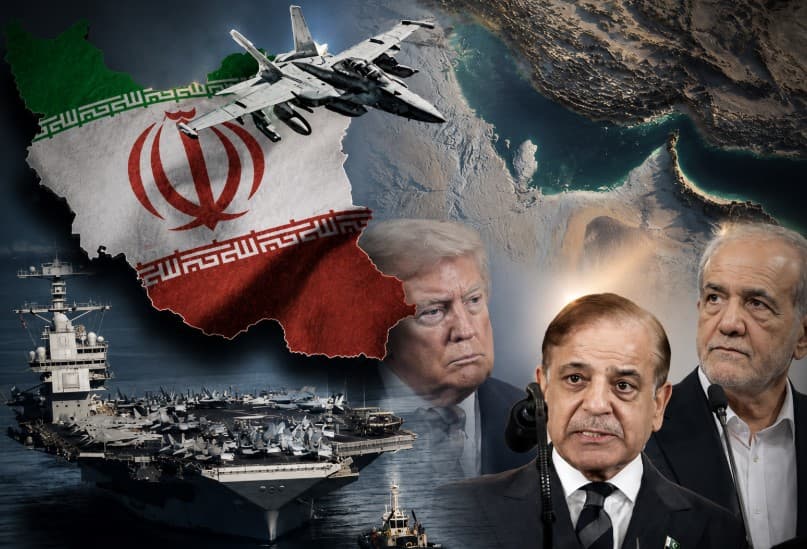
Pentagon chief Pete Hegseth confirmed on May 30 that US stockpiles are ready to resume strikes on Iran. Days after a 60-day truce, the US-Iran war ceasefire 2026 is already on the edge.
What happened
Speaking at Singapore's Shangri-La Dialogue, US Defense Secretary Pete Hegseth delivered a blunt message: Washington is "more than capable" of restarting military strikes on Iran if negotiations fail. The statement came as US and Iranian negotiators were still working through major differences blocking a formal deal to extend the ceasefire and reopen the Strait of Hormuz. President Trump convened a White House Situation Room meeting on May 29 but left without a decision. Iran's government insisted no final agreement existed. Meanwhile, Israeli troops entered the Lebanese village of Dibbine while Israeli and Lebanese military officials held their first direct talks in decades at the Pentagon.
Why this matters beyond headlines
Hegseth's remarks were not casual. Military declarations at the Shangri-La Dialogue, Asia's most-watched defence forum, are strategic communications aimed simultaneously at Tehran, Beijing, and nervous Gulf partners. The message was calibrated: the US has not been depleted by its Iran campaign, it retains global reach, and it is not so desperate for a deal that it will accept unfavorable terms. That framing is essential because the Strait of Hormuz, through which roughly 20 percent of global oil flows, remains partially disrupted. Every day without a deal adds pressure to energy markets and to supply chains already strained by two years of West Asia conflict.
The simultaneous Israel-Lebanon military track in Washington reveals something equally important. The US is managing two parallel wars, trying to decouple the Israeli-Lebanese conflict from the broader Iran standoff so that a deal with Tehran does not collapse over Hezbollah complications. That structural separation is ambitious and fragile.
Political and strategic calculations
Trump's delay is deliberate. By withholding his sign-off, he keeps maximum pressure on Tehran while signaling to domestic audiences that he is extracting concessions, not surrendering. A deal that does not meet all his stated conditions, according to a White House official, will not happen. This is not obstruction; it is leverage management. For Iran, a new supreme leader navigating his first major international crisis cannot afford a deal that looks like capitulation. The gap between what Washington calls "all conditions" and what Tehran can politically survive at home is the real negotiating obstacle, not technical details.
Economic and security impact
The Strait of Hormuz closure or partial disruption has already transmitted inflationary shocks through oil, shipping insurance, and Asian manufacturing input costs. Gulf sovereign wealth funds are quietly repositioning portfolios, hedging against both escalation and a rushed deal that leaves sanctions architecture intact. India, which imports a significant share of its crude from the Gulf, faces a structural squeeze regardless of which scenario unfolds. A resumed US military campaign would spike Brent crude sharply and trigger another wave of freight re-routing around the Cape of Good Hope, adding weeks to delivery times and costs across global supply chains.
The US sanctions announcement on May 30, targeting an Iranian network that defrauded American technology companies to acquire military equipment, signals that economic pressure is being maintained even during negotiations. Sanctions designations during talks are rarely coincidental; they serve as leverage reminders.
Global reactions and diplomatic signals
European governments watching from the sidelines are privately urging Washington to close a deal before summer, fearing that a collapsed ceasefire would arrive just as energy demand peaks. China, which has quietly benefited from discounted Iranian crude, has an interest in a deal that stabilizes prices without restoring full US sanctions enforcement. Russia has little incentive to encourage a settlement that would free US strategic attention for Europe and the Pacific. The Shangri-La Dialogue setting for Hegseth's remarks was pointed: it reminded Indo-Pacific partners that despite the Gulf conflict, the US intends to maintain its posture in Asia.
What happens next
Three scenarios are now plausible. First, Trump signs off on a narrowed deal in the coming days, the Strait reopens partially, and oil markets stabilize. Second, talks drag into June with the ceasefire nominally holding but eroding on the ground as Israeli operations in Lebanon continue. Third, negotiations break down and the US resumes strikes, triggering an oil shock and a wider regional escalation. The probability weight has shifted toward the second scenario: both sides need more time but neither wants to restart full hostilities now. The real deadline is not the ceasefire expiry but the point at which domestic politics in Washington and Tehran make continued negotiation politically toxic. That window is closing faster than the calendar suggests.
The Strait of Hormuz is not just a waterway. It is the barometer of whether the global order can still enforce negotiated pauses in major-power-adjacent conflicts. The answer, in late May 2026, remains deeply uncertain.