

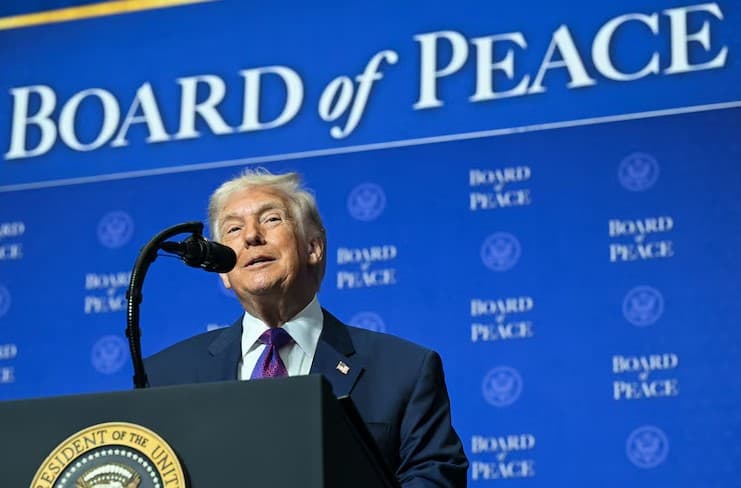
Less than 24 hours after threatening to 'obliterate' Iran's power plants, President Trump on March 25, 2026 pivoted to diplomacy, sending Tehran a 15-point peace plan through Pakistan while Iran offered safe passage to 'non-hostile' oil vessels in the Strait of Hormuz. Oil prices fell nearly 6%. Yet even as Trump spoke of talks, the Pentagon prepared to deploy 2,000 elite paratroopers to the region and Israel pressed ahead with strikes on Iranian soil. The world is watching a high-stakes geopolitical drama with no clear ending, only cascading consequences.
From 'Obliterate' to Negotiation: The Trump Pivot
The speed of Trump's foreign policy reversal is staggering by any historical measure. On Sunday, March 23, he issued an ultimatum threatening to 'obliterate' Iranian power plants, infrastructure whose destruction international legal experts argue could constitute a war crime, if Tehran did not reopen the Strait of Hormuz by Monday. The strait carries roughly one-fifth of the world's daily oil supply, and its blockade by Iran following U.S.-Israeli strikes had driven crude prices to multi-year highs, causing fuel costs inside the United States to spike sharply.
Then, before U.S. markets opened on Monday, the deadline was quietly extended by five days. By Tuesday, Trump was in the Oval Office speaking warmly about receiving a 'very big present' from Tehran, an apparent reference to Iran's International Maritime Organization message guaranteeing safe passage to non-hostile vessels. The benchmark price of crude oil fell close to 6% within hours.
The whiplash pace of these shifts, ultimatum, extension, diplomatic optimism, troop deployment, all within 72 hours, reflects a negotiating style that deliberately destabilizes traditional diplomatic reading. Whether that is a feature or a flaw of Trump's approach depends entirely on the outcome.
Trump (Oval Office, March 25):
"They gave us a present and the present arrived today. And it was a very big present worth a tremendous amount of money. That meant one thing to me, we're dealing with the right people."
The 15-Point Plan: What Is Actually on the Table
According to The New York Times, citing unnamed officials, Washington transmitted a 15-point framework to Tehran through Pakistan, whose prime minister publicly offered to host formal U.S.-Iran talks. The Israeli outlet Channel 12 reported the proposal's key terms, which paint a picture of sweeping ambition on both sides.
The reported terms represent a significant concession from both Washington and Tehran if accurate. For Iran, surrendering enriched uranium is a core red line the country has historically refused to cross, even under severe sanctions. For the Trump administration, offering full sanctions relief and abandoning regime change rhetoric marks a dramatic retreat from the maximalist posture adopted since February 28, when the U.S. and Israel launched their opening assault and killed Supreme Leader Ali Khamenei.
Iran has not officially confirmed these terms or acknowledged formal negotiations. That silence is itself diplomatically significant.
The Strait of Hormuz: What Iran's 'Non-Hostile' Declaration Really Means
The IMO message from Iran, assuring safe passage to 'non-hostile vessels', is the most substantive concrete development of March 25. The strategic weight of the Strait of Hormuz cannot be overstated. Approximately 21 million barrels of oil per day flow through the strait, representing roughly one-fifth of global oil supply and about 35% of all seaborne crude trade. Iran's partial blockade since late February had triggered global energy market chaos.
However, the qualifier 'non-hostile' introduces deliberate ambiguity. Iran retains unilateral discretion over which vessels or flag states it designates as hostile, a loophole large enough to selectively restrict U.S.-aligned carriers or Israeli-linked shipping while presenting a diplomatic face to the broader international community. Insurance markets have not yet responded by reinstating coverage, suggesting that commercial operators and underwriters remain cautious despite the announcement.
The 6% crude oil price drop reflects market optimism, not market certainty. Every 1% drop in oil prices translates to approximately $1.5 billion in annual savings for the U.S. economy, making the Strait announcement politically valuable to Trump regardless of whether full peace materializes.
The Military Contradiction: Troops En Route Despite 'Peace'
Perhaps the most analytically important detail buried in Tuesday's diplomatic optimism is the Wall Street Journal's report that the United States is planning to deploy 2,000 soldiers from the 82nd Airborne Division, one of the U.S. military's premier rapid-deployment forces, to the Middle East. The 82nd is designed for forced entry operations and airfield seizure. Its deployment is not a defensive posture.
Trump's negotiating doctrine appears to be: talk and prepare to fight simultaneously. This creates genuine ambiguity about American intent, which may be precisely the point. A credible military threat strengthens a diplomatic hand. But it also risks miscalculation: Iran may interpret the deployment as preparation for the 'obliteration' threat rather than leverage for a deal.
Simultaneously, Israel's military spokesman stated the war plan was 'unchanged' and Israel would 'continue to deepen the damage.' Israeli forces launched a 'large wave' of airstrikes across Iran, threatened Beirut's southern suburbs, and announced it would seize control of south Lebanon up to the Litani River. Israel is not a participant in the U.S.-Pakistan-Iran diplomatic track, and its independent military escalation represents the single greatest variable that could collapse any emerging framework.
Critical Tension:
Trump is simultaneously negotiating a ceasefire and deploying elite paratroopers. Israel, not a party to the talks, continues independent military escalation on Iranian soil and in Lebanon. Any Israeli action that kills Iranian civilians or strikes nuclear infrastructure could collapse the diplomatic track overnight.
The Regional Spillover: Lebanon, Gulf States, and a Multi-Front Crisis
The conflict has long since ceased to be a bilateral U.S.-Iran confrontation. Lebanon has been pulled directly into the war since March 2, when Hezbollah began firing rockets into Israel in retaliation for Khamenei's killing. Israeli strikes have killed at least 1,072 people in Lebanon and displaced over one million. The Lebanese government, demonstrating rare assertiveness, ordered Iran's ambassador out of Beirut by Sunday, accusing Tehran of directly commanding Hezbollah operations from its soil.
Gulf Arab states are also under fire. Bahrain, Kuwait, the UAE, and Saudi Arabia all reported intercepting Iranian drone and missile attacks on March 25. Kuwait's main airport sustained damage when drones struck a fuel tank, a significant escalation against a country that hosts U.S. military forces at Ali Al Salem Air Base. These strikes suggest Iran is deliberately pressuring U.S. regional partners even while engaged in indirect peace talks, likely to maximize its bargaining leverage.
Analytical Verdict: Diplomacy or Theater?
The honest analytical answer is: both, simultaneously. Trump's 15-point plan, if accurately reported, contains genuinely negotiable terms on both sides. Full sanctions relief and civil nuclear assistance in exchange for enrichment caps and Hormuz access is a framework that serious diplomats could work with. Pakistan as a mediator, a Muslim-majority nuclear state with ties to both Washington and Tehran, is a credible channel.
But three structural risks threaten the process. First, Iran has not publicly acknowledged any negotiations are occurring. Khamenei's successor and the Revolutionary Guard command may hold different views than whatever backchannel officials engaged Pakistan. Second, Israel's independent military campaign creates an uncontrollable variable that neither Washington nor Tehran fully manages. Third, Trump's own credibility as a negotiating partner is complicated by the pattern of his statements, the same leader who extended a deadline one day after threatening obliteration must now convince Iran that a signed agreement is worth the political cost of surrendering enriched uranium.
For global markets and the 1.5 billion people who depend on Hormuz-transited energy, the next 72 hours are defining. The five-day extended deadline expires Saturday. A deal or a disaster, both remain entirely plausible.
Conclusion
The Trump Iran peace plan of March 25, 2026 is neither the breakthrough the White House wants the world to believe nor the empty theater its critics claim. It is a genuinely uncertain diplomatic moment overlaid with military escalation, market volatility, and a regional war that has already claimed thousands of lives. The Strait of Hormuz partial reopening is real. The 15-point plan is substantive on paper. The contradictions are also real. History will be decided not by statements but by what both governments sign, and what Israel does between now and Saturday.