

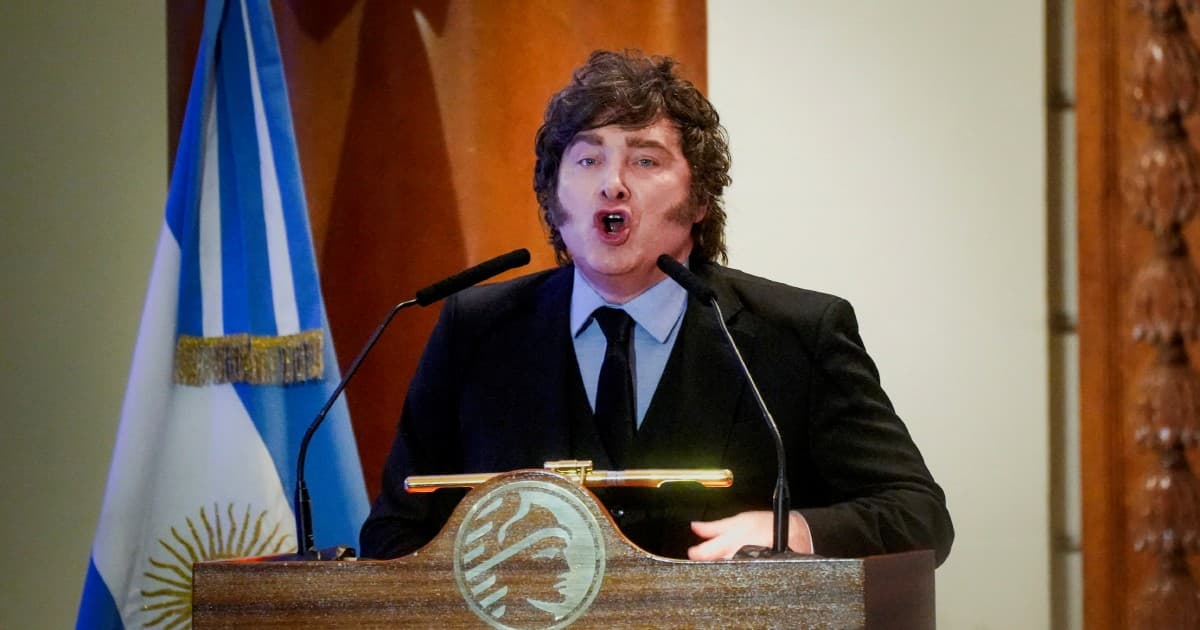
Javier Milei arrived in Argentina's Casa Rosada in December 2023 as the most ideologically unusual head of state in the country's democratic history. The self-described anarcho-capitalist economist who campaigned with a chainsaw as his symbol of state demolition, who named his dogs after Milton Friedman and Murray Rothbard, and who described the Argentina president falklands political class as a criminal caste has governed with the same combination of theatrical provocation and genuine disruptive intent that characterised his campaign. The result has been a presidency that is, simultaneously, one of the most economically significant reforming administrations in Latin American history and one surrounded by documented corruption allegations, diplomatic explosions, institutional scandals, and the resignation of a cabinet chief whose departure illuminated everything that was going wrong behind the theatrics. Fact-checking javier milei requires separating the real from the exaggerated, the documented from the alleged, and the short-term damage from the longer arc of a political project that has not yet finished proving itself.
What Is Verified vs Alleged
Multiple claims in this article relate to ongoing legal and parliamentary investigations in Argentina. Where allegations have not been adjudicated, they are presented as allegations with their evidentiary basis assessed. Where facts are confirmed by official records, court documents, or multiple credible independent sources, they are presented as verified.
Javier Milei Has Presided Over Corruption and Bribery Scandals That Compromise His Anti-Corruption Mandate
The Background: Milei's entire political identity was constructed around the premise that the Argentine political establishment was corrupt and that he alone represented the outsider necessary to cleanse it. The scandals that emerged during his presidency therefore carry a specific weight beyond their individual significance: they challenge the foundational premise on which the administration was built.
The Evidence: The most significant documented scandal to emerge during Milei's presidency was the $LIBRA cryptocurrency affair. In February 2025, Milei promoted a cryptocurrency called $LIBRA on his official X account, describing it as a project designed to fund Argentine small businesses. The coin surged in value within minutes of his promotion, then collapsed after insiders who had held pre-launch positions sold their holdings in what analysts and prosecutors characterised as a coordinated pump-and-dump operation. Argentine investors who had purchased $LIBRA following the presidential promotion lost an estimated $250 million in aggregate.
Argentina's federal prosecutor's office opened a formal investigation into whether Milei had received compensation for promoting the coin, whether he had advance knowledge of the insider selling structure, and whether his promotion constituted fraud. Milei denied knowledge of the insider structure, stating he had been asked to promote the project in good faith as an economic development initiative. The investigation was ongoing at the time of writing. No charges had been formally filed against Milei personally. Multiple figures connected to the coin's launch structure were named in the investigation.
A congressional impeachment motion was filed by opposition legislators. It did not achieve the votes required to advance, but its filing was itself a documented political event of significance.
Fact-Check Verdict: Scandal Verified, Personal Culpability Unresolved. The $LIBRA affair and its consequences for Argentine investors are documented and serious. Milei's personal knowledge of and participation in any fraudulent structure has not been proven. The investigation is active and its outcome is pending.
The ANDIS Disability Agency Kickback Scandal Was a Systemic Corruption Problem
The Background: ANDIS, Argentina's National Disability Agency, became the focus of a major corruption investigation that implicated officials appointed during the Milei administration and raised specific questions about whether the government's anti-corruption credentials extended to the management of vulnerable population welfare programmes.
The Evidence: Argentina's federal judiciary opened an investigation in 2024 into allegations that officials within ANDIS had created a kickback structure in which disability benefit approvals were conditioned on payments to intermediaries connected to the agency's leadership. Testimony from whistleblowers within the agency, cited in federal court filings, described a systematic arrangement in which applications for disability benefits were deliberately delayed until families made payments to specific brokers who had access to agency officials.
The investigation was credible and documented. Court filings identified specific individuals connected to the scheme. ANDIS leadership was replaced following the investigation's public emergence, which Milei's administration characterised as evidence of its responsiveness to corruption within state structures it had inherited and was actively cleaning up.
What remains disputed is the extent to which the scheme was introduced during the Milei administration versus inherited from the previous government's appointments, and whether political direction from above the agency level was involved.
Fact-Check Verdict: Scheme Verified, Attribution to Milei Administration Disputed. The ANDIS kickback structure was real and is under judicial investigation. The government's claim that it took action when the scheme was identified has documentary support. The opposition's claim that administration officials were responsible for creating the scheme has not been proven in the available record.
Manuel Adorni's Resignation Revealed Deep Dysfunction at the Top of the Milei Government
The Background: Manuel Adorni served as Milei's government spokesman and became one of the most visible faces of the administration's media communication strategy. His resignation generated intense javier milei coverage that focused on what it revealed about the internal dynamics of a government whose public image depended heavily on projecting disciplined message control.
The Evidence: Adorni's departure from his role as government spokesman was confirmed in 2025 when he was appointed Secretary of Communications, which some observers characterised as a lateral move with reduced day-to-day visibility and others characterised as a demotion. The circumstances surrounding the transition were not fully explained publicly.
In the weeks preceding his reassignment, Argentine political journalists reported internal tensions between Adorni and other senior administration figures over the communications strategy following the $LIBRA affair. Multiple sources described a communications environment in which the president's direct social media activity, particularly on X where Milei maintains an exceptionally active and unfiltered presence, was creating contradictions with the messaging his official spokesman was tasked with delivering.
Fact-Check Verdict: Reassignment Confirmed, "Dysfunction" Characterisation Partly Verified. Adorni's changed role is confirmed. Evidence of communications dysfunction following the $LIBRA affair is credible and multiply sourced. Whether this constitutes deep institutional dysfunction or normal internal government reconfiguration is a judgement call on which reasonable observers differ.
Milei Has Caused Serious International and Diplomatic Rows Including Over the Falklands
The Background: The argentina president falklands question is one of the most emotionally charged in Argentine political culture. The Falkland Islands known in Argentina as the Malvinas have been the subject of a sovereignty dispute between Argentina and the United Kingdom since the 1982 war that resulted in British military victory and Argentine defeat. Every Argentinian president is expected to maintain the claim. What they are not expected to do is take the claim to such extremes that it disrupts other diplomatic relationships Argentina depends on.
The Evidence: Milei's position on the falklands is constitutionally consistent with Argentine law, which requires the president to pursue recovery of the Malvinas through peaceful means. What generated diplomatic friction was the broader framework of Milei's international positioning, in which his ideological alignment with specific foreign politicians and movements created confusion about Argentina's bilateral relationships.
His public closeness with Donald Trump and his explicit criticism of other Western leaders, including Spanish Prime Minister Pedro Sánchez whom he described publicly as a corrupt fool whose wife was also corrupt produced a formal diplomatic incident between Buenos Aires and Madrid that resulted in Argentina's ambassador to Spain being summoned and a temporary ambassadorial recall. A sitting head of state publicly insulting another country's leader and their spouse in those terms is, by the standards of international diplomatic practice, an extraordinary event.
His relationship with Israel generated a separate diplomatic dimension. Milei visited Israel, expressed strong personal solidarity with the Israeli government, and made statements that were celebrated by supporters as principled alliance-building and criticised by opponents as ideologically driven alignment that complicated Argentina's relationships with Arab League members with whom it maintained significant trade relationships.
On the Falklands specifically, Milei's statements maintained the conventional Argentine sovereignty position without the escalatory rhetoric that some of his other international positions carried.
Fact-Check Verdict: Diplomatic Rows Verified, Falklands Specific Claims Require Nuance. The Spain diplomatic incident is documented and serious. The Israel relationship generated real diplomatic complexity. The specific Argentina president Falklands claim requires clarification: Milei's Malvinas position follows constitutional requirements; the broader diplomatic friction around his presidency is real and multiple documented.
The Turning Point: What Milei Has Actually Achieved That His Critics Undercount
Having documented every major verified scandal and diplomatic failure, honest fact-checking requires equal attention to what Milei has achieved that the scandal coverage consistently underweights.
Argentina's annual inflation rate, which exceeded 200 percent when Milei took office, had fallen to below 50 percent within his first twelve months in office. This was not a small achievement. Inflation at those levels destroys the purchasing power of every Argentine worker, every Argentine family, and every Argentine business simultaneously. Its reduction was the single most important economic event in Argentina in a generation and affected the daily lives of millions of people more directly than any of the documented scandals.
Argentina achieved a fiscal surplus with the government spending less than it took in for the first time in many years. The International Monetary Fund, whose relationship with Argentina had historically been one of the most complex and contentious in the fund's history, acknowledged that the Milei administration's fiscal adjustment was significant and credible in a way that previous Argentine adjustment promises had not been.
The diplomatic rows, while real, did not prevent Argentina from maintaining its relationship with its most important economic partners. Trade relationships continued. IMF negotiations proceeded. Investment inquiries increased as the fiscal adjustment demonstrated that the government had genuine commitment to its stated economic direction.
Conclusion: The President Who Broke Argentina's Rules and Found New Ones
Javier Milei is simultaneously one of the most documented cases of scandal and one of the most documented cases of economic reform success in contemporary Latin American politics. These two facts do not cancel each other out. They both require accounting for any honest assessment.
The $LIBRA affair damaged his credibility and is under active investigation. The ANDIS scandal revealed that corruption in Argentine state structures did not disappear with a change of government. Adorni's reassignment revealed internal communications dysfunction at a critical moment. The Spain diplomatic incident revealed that Milei's ideological commitments sometimes overwhelm his diplomatic judgment. These are all real problems with real costs.
And yet the Argentina president Falklands question the question of whether Milei represents a legitimate governing authority capable of advancing Argentina's national interests cannot be answered by cataloguing scandals alone. The inflation he inherited was destroying the living standards of a nation. The fiscal trajectory he inherited was unsustainable. The institutional decay he identified, however imperfectly he has navigated it, was real.
The president who walked into the Casa Rosada with a chainsaw is learning, through documented failures and real successes, that demolition is only the first act. What comes after the rubble is cleared is the harder work, and the hardest test of whether the disruption was worth it.
On the current evidence, that test is not yet decided. But the direction of travel is more positive than the scandal record alone would suggest.
Relevant Content for More Read...