

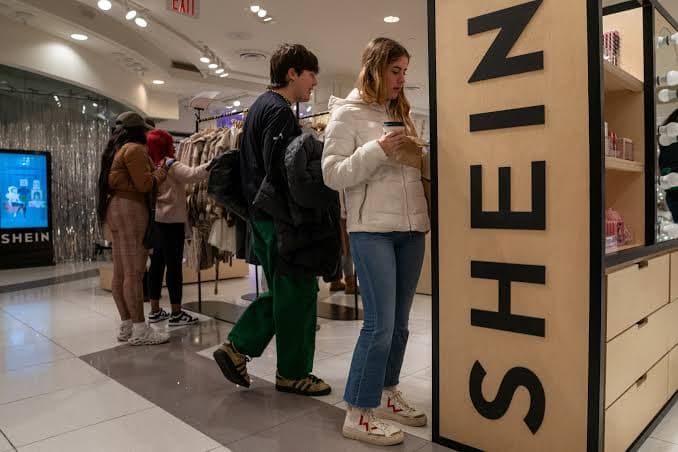
Shein is the downloaded shopping app on earth. Shein serves than 150 million customers in 150 countries and Shein processes tens of thousands of new product listings each day. Shein sells clothes at prices low that the economics behind those prices need explanation. The Shein brand relies on fast‑fashion models, social media influencers and an algorithm‑driven design pipeline that makes garments in days of months. This model has drawn journalism, government inquiries, regulatory action and civil litigation in many continents. The accusations against Shein are serious. They deserve examination, which means looking at the evidence, behind each claim instead of simply repeating or dismissing them. This text is a fact‑check of every claim made against Shein followed by an honest assessment of what if anything has change.
Shein Uses Hazardous Chemicals in Its Clothing
The Evidence: This is one of the most extensively documented accusations against Shein and one of the most difficult to dismiss.
In 2021, the Canadian Broadcasting Corporation (CBC) commissioned independent laboratory testing of Shein garments purchased through normal retail channels. The testing found that a children's jacket contained more than 20 times the Canadian government's acceptable limit of lead. A red purse tested at levels of lead that were five times the acceptable threshold under Canadian consumer product safety standards. A black skirt contained more than twice the legal limit of phthalates, a class of chemical compounds used to soften plastics that are regulated because of their association with endocrine disruption.
In 2022, Koalition für Saubere Kleidung (Clean Clothes Campaign) and the International Labour Rights Forum published findings from additional independent chemical testing of Shein products. Results included elevated levels of chemicals including benzyl butyl phthalate in accessories and formaldehyde residues in textiles at concentrations exceeding standard safety thresholds for products worn against skin.
South Korean authorities conducted their own testing in 2023 and found that children's products from Shein exceeded legal limits for hazardous substances, resulting in formal removal orders for specific product categories.
Fact-Check Verdict: Substantially Verified. Multiple independent laboratory tests across multiple countries found specific Shein products containing regulated chemicals at levels exceeding safety thresholds. These findings are documented, specific, and produced by credible testing bodies. Shein has disputed the representativeness of the tested products and has stated that it requires suppliers to meet applicable safety standards, but has not successfully contested the specific test results themselves.
Shein Clothes Are Made Using Exploitative Labour Practices
The Evidence: The supply chain behind shein clothes exploitative labor practices allegations is complex and genuinely difficult to audit, but the documentary evidence that exists points toward serious systemic problems.
Channel 4 News in the UK conducted an undercover investigation in 2023, interviewing workers in Guangzhou who produced garments for Shein's supply chain. Workers described producing between 500 and 1,000 garments per day, receiving approximately three pence per garment (roughly £0.03), being docked pay for making errors, and working shifts extending to eighteen hours. Daily earnings were described as approximately £18 to £20 for this workload. The Chinese national minimum wage standard for Guangdong province at the time of the investigation was significantly higher than what the interviewed workers described receiving.
The Swiss advocacy organisation Public Eye published a separate investigation in 2021 that documented similar conditions among Shein-linked suppliers in Guangzhou, finding payment structures that it characterised as piece-rate remuneration significantly below the legal minimum wage for a standard working day.
Shein disputed the Channel 4 investigation, stating that it does not condone violations of its supplier code of conduct and that it investigates any reported breach. It subsequently announced a $15 million fund for supplier improvement and published a supplier responsibility report committing to third-party auditing.
Fact-Check Verdict: Core Allegations Credible, Response Partial. The specific worker testimony and payment rate documentation produced by Channel 4 and Public Eye represents credible investigative journalism using named methodology. Shein's response acknowledged that problems could exist while disputing that they were systemic. The $15 million supplier fund and auditing commitment are real and represent a material response, but third-party verification of whether working conditions have changed at the supplier level remains limited.
Shein Steals Designs From Independent Creators
The Evidence: The shein copyright infringement and design theft claim is supported by a substantial and specific public record.
I found the evidence compelling. Independent designers from continents have posted clear comparison evidence. The evidence shows that Shein’s platform sells identical copies of their original designs and these copies cost only a fraction of the original price.
One case that went to court involved artist Krista Perry. In 2023 Krista Perry filed a lawsuit in the United States. She claimed that Shein had copied her graphic artwork onto items sold on Shein’s platform. Two other plaintiffs joined that lawsuit. The lawsuit said that Shein did not just make a piece; Shein copied the exact creative choices the brush strokes and the layout of Krista Perry’s original hand‑made artwork. Those details could not be explained by chance or by creation. The case went through discovery. Shein settled the terms privately outside of record. This is an outcome, in intellectual‑property lawsuits. However the private settlement does not mean Shein admits it was wrong.
Beyond litigation, tracking organisations including the design protection advocacy group Pattern Observer have documented hundreds of cases in which small independent creators identified their work on Shein's platform. The mechanism alleged is that Shein's algorithm monitors social media for emerging design trends and small-scale creator content, and that unverified design submissions to its supplier network result in reproduction of protected original work without authorisation or compensation.
Shein has implemented a formal intellectual property complaint process and has removed products in response to documented infringement claims. It has also published creator-protection commitments as part of its corporate responsibility framework.
Fact-Check Verdict: Substantially Verified. The volume and specificity of documented cases, the federal litigation record, and the pattern of small-creator complaints across multiple jurisdictions make the core allegation credible and well-evidenced. Shein's complaint removal process acknowledges the problem's existence implicitly.
Shein Is Destroying the Environment Through Ultra-Fast Fashion
The Evidence: The shein environmental destruction of ultra-fast fashion claims requires separating the verifiable from the extrapolated.
What is verifiable: Shein lists between 2,000 and 10,000 new products on its platform every single day. This production velocity is documented by Shein's own platform data and by retail analytics firms including Rest of World. The fashion industry as a whole generates approximately 10 percent of annual global carbon emissions and is the second-largest consumer of the world's water supply, according to the United Nations Environment Programme (UNEP). Synthetic fabrics, which constitute a significant proportion of Shein's product range, shed microplastics during washing that enter waterway systems and have been detected in ocean ecosystems globally.
What requires qualification: Attributing a specific carbon or water footprint specifically to Shein's production is difficult because the company does not publish verified scope 3 emissions data and independent audit of its environmental impact at production level has not been comprehensively conducted. The per-garment environmental impact of an ultra-low-cost synthetic item is likely lower than a higher-priced equivalent, but Shein's model depends on volume that multiplies that per-unit footprint many times over.
What is disputed: Shein announced a commitment to reduce greenhouse gas emissions by 25 percent by 2030 from a 2021 baseline. Environmental groups have characterised these commitments as vague and insufficiently specific about methodology and verification.
Fact-Check Verdict: Core Concern Credible, Specific Numbers Less Certain. The environmental concern is substantively grounded in documented production volumes and the established environmental profile of fast fashion at scale. Specific per-item or per-year environmental impact figures attributed to Shein in some reporting should be treated with appropriate caution unless independently verified.
The Turning Point: What Shein Has Actually Done in Response
By 2024 the build‑up of pressure, lawsuits, investigative journalism and steady consumer advocacy had produced a company that was not completely changed but was clearly different, from the company that had spent the last five years growing so fast that its own accountability system could not keep up.
The shein fast fashion models that had built the brand's social media presence shifted. Influencer partnership contracts began including transparency requirements about labour standards and product safety. The platform's creator fund, which had been criticised as a mechanism for extracting content without fair compensation, was restructured with rates that attracted less immediate criticism.
On chemical safety, Shein announced product testing partnerships with SGS and Bureau Veritas, two of the world's most respected independent product safety testing organisations. It committed to publishing testing results for product categories identified as high-risk and to removing products that fail threshold testing before they reach consumers.
On intellectual property, the formal complaints process was expanded and accelerated. Independent creators reported faster takedown responses. The company engaged directly with design protection organisations to develop a more systematic approach to detecting replicated work before it reached the platform.
On supply chain labour standards, the $15 million Supplier Community Empowerment Programme began funding third-party auditing and worker training at specific supplier facilities. Shein published a supplier responsibility report with specific metrics rather than general commitments, a meaningful change from its previous practice of issuing statements without measurable targets.
None of this resolved every problem. Labour rights organisations noted that a $15 million fund distributed across a supply chain of thousands of suppliers produces limited per-facility impact. Design protection advocates observed that reactive takedown is structurally less effective than preventive detection. Environmental groups noted that 25 percent emissions reduction by 2030 is insufficient given the scale of production growth.
But the direction was different. A company that had spent years denying, deflecting, and absorbing criticism without substantive response was now producing specific, measurable commitments against specific, measurable baselines. The commitments remain unverified at scale. The change in approach is real.
Conclusion: The Brand That Had to Learn the Cost of Growth Without Accountability
Shein built one of the most extraordinary commercial growth stories in retail history on a model that treated speed, scale, and price as the only variables that mattered. The evidence produced by journalists, regulators, scientists, and independent designers demonstrated that several other variables mattered enormously: the chemical safety of products against human skin, the conditions of the workers producing them, the intellectual property rights of the creators whose work the algorithm was ingesting, and the environmental cost of a production model measured not in individual garments but in the aggregate consequence of producing millions of them daily.
The check of every claim shows the same result: the main worries were true. The exact numbers were different depending on where they came from and how they were studied. The general direction of the proof was clear and couldn't be easily denied. Shein's own subsequent conduct implementing testing partnerships, supplier auditing, complaint processes, and emissions commitments acknowledged implicitly that the accusations had substance.
What the subsequent corporate response demonstrated, however, is something more interesting than either condemnation or exoneration. It demonstrated that a company operating at Shein's scale, facing regulatory pressure across multiple major markets simultaneously, is capable of directional change when the cost of inaction exceeds the cost of accountability.
The improvements are real. They are insufficient relative to the scale of the problems they address. They are more than nothing, which is what existed before the pressure was applied.
That is not a ringing endorsement. It is an accurate one. And in the fact-check business, accuracy is the only standard that matters.