

Moscow calls blast an act of terrorism as analysts warn of a new front in the war at sea
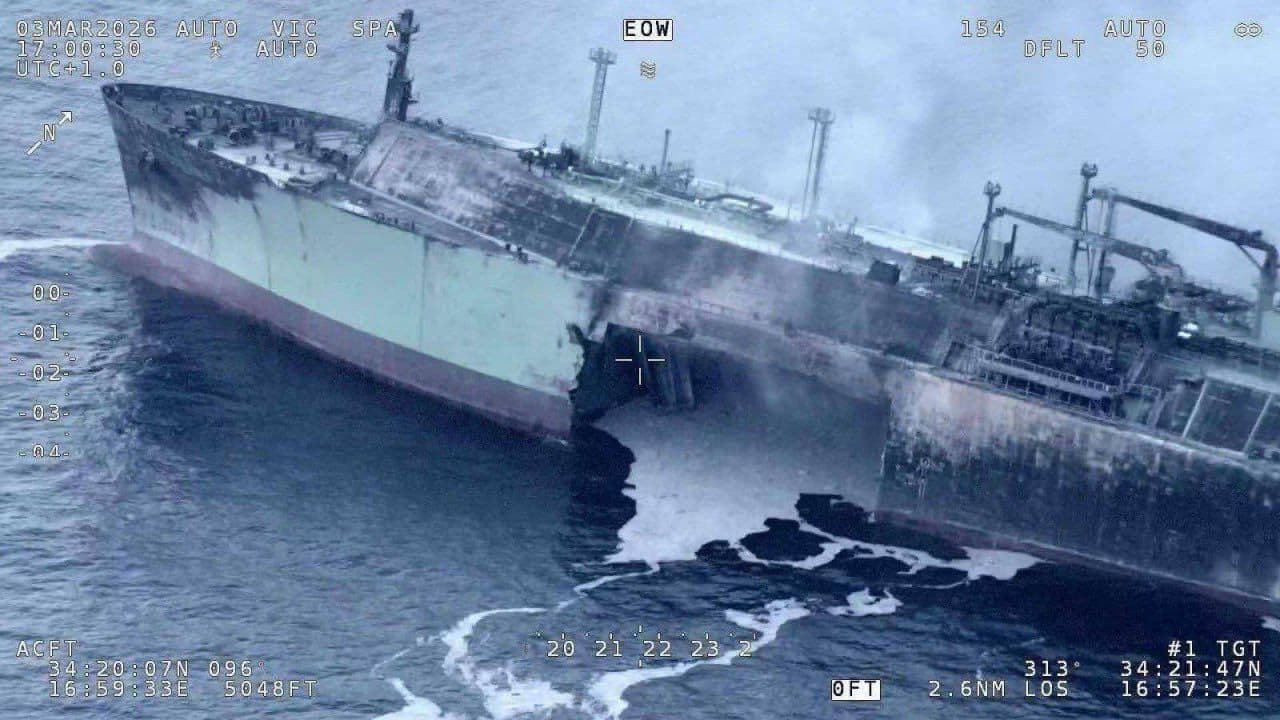
A Russian-flagged liquefied natural gas tanker sank in the central Mediterranean early Wednesday after a series of explosions tore through its hull, triggering a diplomatic crisis between Moscow and Kyiv and raising urgent questions about whether the war in Ukraine has opened a volatile new maritime front far beyond its original theatre.
The vessel, the Arctic Metagaz, was carrying approximately 61,000 metric tons of LNG when it was struck late Tuesday night roughly 240 kilometres off the Libyan port city of Sirte. The Libyan Maritime Authority, which has jurisdiction over the area's search-and-rescue zone, confirmed the sinking in a statement issued Wednesday morning. All 30 crew members were rescued by passing commercial vessels and transported to Benghazi, where port health officials said they were being assessed for shock and minor injuries. No fatalities were reported.
Russia moved swiftly to assign blame. In a televised address Wednesday evening, President Vladimir Putin described the incident as "a terrorist attack designed to sabotage global energy stability," directly accusing Ukraine's military of deploying uncrewed surface vessels from the Libyan coastline to strike the tanker. The Kremlin has not provided photographic or technical evidence to support the claim, and independent verification of the attack's origin remains impossible at this stage.
Ukraine's Defence Ministry declined to confirm or deny involvement. A spokesperson, responding to questions from journalists in Kyiv, said only that "Ukrainian forces continue to operate in defence of sovereign Ukrainian territory and its legitimate interests."
A Ship with a Complicated History
The Arctic Metagaz was not an ordinary commercial vessel. According to the Brussels-based sanctions monitoring group Kyiv School of Economics, which tracks Russian energy shipping, the tanker was flagged as a likely component of Russia's so-called shadow fleet, a loose network of vessels operating outside Western insurance and registration systems to transport sanctioned Russian energy exports.
"This ship had no legitimate Western insurer, no recognised classification society, and had made port calls consistent with the Arctic LNG 2 project. It fits the profile precisely." Maria Snegovaya, Senior Fellow, Center for Strategic and International Studies
Arctic LNG 2, a massive liquefaction project on the Gydan Peninsula in western Siberia, has been under Western sanctions since 2023. Russia has struggled to find buyers and logistics partners willing to move its output amid the sanctions regime.
Ukraine's Expanding Reach at Sea
From the Black Sea to the Mediterranean: A Strategic Leap
If Russia's account of the attack is confirmed, it would represent the longest-range maritime drone strike Ukraine has ever conducted and the first to occur outside the Black Sea.
Ukraine has invested heavily in its naval drone programme since early in the war. The most capable system in its publicly known arsenal is the Magura V5 and its predecessors, including the "Sea Baby" drone developed by the Security Service of Ukraine (SBU). Ukrainian officials have previously claimed an operational range of up to 1,500 kilometres for some variants, a figure that, if accurate, would easily put Mediterranean shipping lanes within reach.
"The Black Sea campaign showed that Ukraine could degrade Russia's naval capacity without a conventional fleet. The question was always whether they would extend that logic to other theatres. This, if confirmed, is a significant escalation of geographic scope." Sidharth Kaushal, Research Fellow in Sea Power, Royal United Services Institute (RUSI), London
Ukraine's drone campaign in the Black Sea has previously sunk or damaged dozens of Russian naval and commercial vessels, including the guided-missile cruiser Moskva and multiple oil tankers near the Kerch Strait.
Moscow's Warning and the Risk of Escalation
Kremlin Raises Spectre of Strikes on Ukrainian Grain Corridors
The Kremlin's response has been calibrated to signal both outrage and deterrence. Dmitry Peskov, Putin's spokesman, told reporters Wednesday that Russia "reserves the right to respond appropriately" to what he described as an act of terrorism against civilian shipping, though he did not specify what form any retaliation might take.
Russian state media has raised the spectre of strikes on Ukraine's grain export corridors, the Black Sea shipping lanes through which Kyiv exports wheat and sunflower oil to markets in Africa and the Middle East under the framework of international agreements. Any Russian interference with that shipping would likely provoke a sharp international response.
"Moscow's threat against grain corridors is a high-risk move. It would alienate countries in the Global South that Russia has worked hard to keep neutral, potentially at a moment when it can least afford additional diplomatic isolation." Elina Ribakova, Senior Fellow, Peterson Institute for International Economics
Regional Governments React
From Malta to Cairo, Mediterranean States Move to Distance Themselves
The incident has prompted rapid diplomatic activity across the Mediterranean.
Malta's Rescue Coordination Centre assisted with communications during the rescue operation. In a statement, Malta's Foreign Ministry said it was "monitoring the situation closely" and called for restraint by all parties, while noting that Malta had no prior knowledge of the tanker's route.
Egypt's Petroleum Ministry issued a brief statement clarifying that the Arctic Metagaz was not destined for any Egyptian port and that the country "has no connection to the vessel or its cargo," a move interpreted by analysts as Cairo distancing itself from association with a sanctioned ship.
Libya's Government of National Unity, which nominally controls Tripoli and the western coast, said it was investigating reports that the attack may have been launched from within its territorial waters or exclusive economic zone, a claim that, if substantiated, would have significant implications under international maritime law.
The European Union's External Action Service said it was in contact with member states in the region and called for a "transparent and independent" investigation.
Environmental Concerns Remain
Fuel Oil Poses Greater Threat Than the Cargo Itself
LNG itself, methane in liquid form, presents a relatively low environmental risk after a catastrophic event, as it evaporates rapidly rather than spreading across the water's surface. However, maritime experts note that a vessel the size of the Arctic Metagaz would have carried several hundred tonnes of heavy fuel oil for its own propulsion, along with lubricants and other industrial chemicals that could leach into the water column.
The International Maritime Organisation said Wednesday that it had been notified of the sinking and would liaise with the Libyan and Maltese authorities to assess any pollution risk. A preliminary assessment was expected within 48 hours.
What Comes Next
Analysts Warn of a New, Wider Theatre of War
The incident has placed the broader question of Mediterranean maritime security at the top of the agenda for several European governments that have, until now, treated the Russia-Ukraine war primarily as an eastern European land conflict.
"This is a forcing function. Governments that have been content to watch this war from a distance now have to grapple with the possibility that their own maritime neighbourhood is becoming a theatre of operations." Camille Grand, Distinguished Policy Fellow, European Council on Foreign Relations, and former NATO Assistant Secretary General
Western intelligence agencies are understood to be assessing the technical evidence from the blast, including satellite imagery, acoustic data, and signals intelligence. Whether those assessments will be made public, and when, may determine the pace at which the diplomatic crisis escalates.
For Kyiv, the attack, if confirmed, is likely to be framed as a legitimate act of economic warfare against sanctioned assets financing Russia's military. For Moscow, it will serve as further justification for a posture of total confrontation. For everyone else watching from the Mediterranean's coastlines, the wreckage of the Arctic Metagaz is a reminder that in this war, no water has yet proven too distant.