

Opposition parties strongly criticised Prime Minister Narendra Modi over his recent speech on the Women's Reservation Bill India debate. Leaders accused the Prime Minister of using emotional rhetoric without committing to concrete implementation steps. Several opposition figures described the speech as politically motivated and timed to influence elections.
Immediate political reaction
The Prime Minister's address on the Women's Reservation Bill drew an immediate and sharp rebuttal from opposition benches. Senior leaders across multiple parties accused the government of deploying emotional messaging about women's empowerment while deliberately avoiding any specific implementation timeline. The speech, critics contended, was designed to harvest electoral dividends rather than deliver policy clarity to the millions of Indian women it purports to serve.
Opposition spokespersons pointed out that the Prime Minister offered no date, no legislative roadmap, and no administrative framework by which the promised 33% reservation would be operationalised. "Symbolic messaging has been prioritised over execution," alleged one senior Congress leader, characterising the address as an electioneering exercise draped in constitutional language. Others noted that the timing of the speech proximate to a crucial electoral cycle raised legitimate questions about the government's sincerity in advancing the reform.
"No date, no roadmap, no framework opposition leaders allege the speech delivered performance, not policy."
The 131st Constitutional Amendment Bill, key legal background
Nari Shakti Vandan Adhiniyam, key provisions
- Formally enacted as the Constitution (131st Amendment) Bill
- Reserves 33% of seats for women in the Lok Sabha
- Reserves 33% of seats in all State Legislative Assemblies
- Implementation contingent on the next national Census
- Further conditioned on the completion of a Delimitation exercise
The Nari Shakti Vandan Adhiniyam, passed with considerable parliamentary fanfare, represents one of India's most structurally significant constitutional amendments in recent decades. The legislation, if implemented on schedule, would fundamentally reshape the gender composition of both national and state legislatures. Yet it carries within it a provision that has become the central fault line in the political debate: the reservation cannot take effect until after the next Census and the subsequent Delimitation exercise are completed.
This conditionality transformed what could have been an immediate reform into a constitutionally deferred promise. Political observers noted that with both the Census and Delimitation expected to take several years, the effective implementation of women's reservation had been pushed well beyond the horizon of current electoral accountability.
BJP and Modi strategy, political criticism
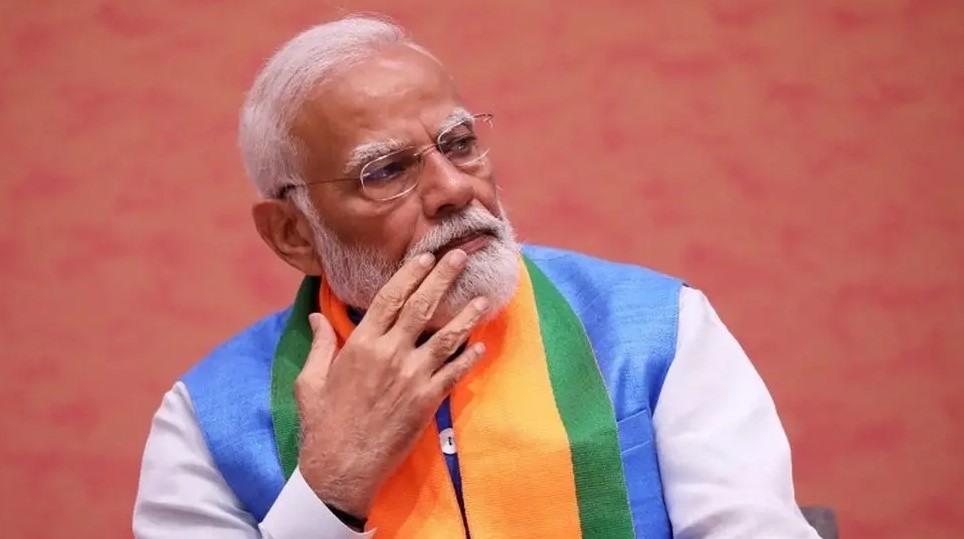
Critics argued that the BJP leadership made a deliberate strategic calculation by fusing women's reservation with the Delimitation process. Opposition leaders alleged that this linkage was not incidental but engineered a mechanism that allows the party to claim credit for a historic reform without bearing the political cost of its immediate disruption to existing seat allocations.
Political observers suggested that by tying the amendment to Delimitation, the ruling party effectively gained the narrative benefits of the legislation the optics of champion of women's rights while insulating itself from the internal party frictions and regional backlash that immediate implementation would inevitably trigger. "The policy became a political spectacle rather than immediate reform," alleged one senior opposition strategist.
Critics further argued that the Prime Minister's speech amplified this dynamic: it celebrated the passage of the legislation as an achievement while offering no accountability framework for when, precisely, Indian women would actually occupy those reserved seats.
The Delimitation controversy
Delimitation, the redrawing of parliamentary and assembly constituency boundaries based on updated population data is, in ordinary circumstances, a routine constitutional exercise. Its linkage to women's reservation, however, has detonated a separate and potentially more consequential political controversy centred on federalism and regional equity.
Southern states, led most vocally by Tamil Nadu, have raised pointed concerns about what a population-based Delimitation could mean for their parliamentary representation. States that aggressively implemented family planning policies over the past three decades holding population growth in check now face the prospect of losing seats to states with higher population growth rates. Political leaders in Tamil Nadu and Kerala have argued that their citizens are being penalised for responsible governance.
"States that controlled population growth may be penalised in seat redistribution a democratic paradox, critics allege."
The suspicion in southern political circles is that Delimitation, when it comes, will fundamentally reconfigure the balance of electoral power concentrating it further in the Hindi heartland. By attaching women's reservation to this exercise, critics contend, the government has turned a gender justice measure into a vehicle for a contested demographic reorganisation of Indian democracy.
Clarifying the opposition position, especially DMK
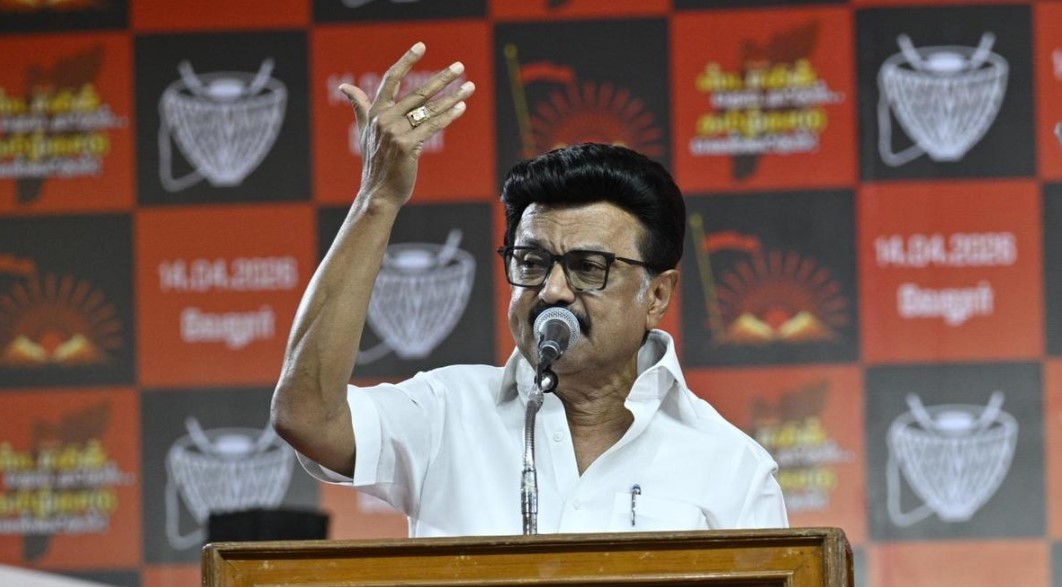
One of the most consequential distinctions in this debate is one that has been repeatedly obscured in public discourse: opposition parties, and particularly the DMK, have been categorical that their objections are not to women's reservation per se. DMK leaders have clarified on multiple occasions that their party unreservedly supports the principle of women's representation in elected bodies.
Their opposition is narrowly and specifically directed at the conditionality imposed on implementation the requirement that reservation await the outcome of a Delimitation exercise that they regard as potentially unjust to southern states. DMK's demand is precise: implement women's reservation immediately, without tethering it to a future demographic redistribution that threatens the federal balance between states.
To conflate DMK's opposition to conditional implementation with opposition to women's reservation itself, party leaders have argued, is a deliberate misrepresentation perpetuated for political advantage. The party's position is one of demanding faster, fairer implementation not obstruction.
Accusations against the opposition, the government narrative
The BJP has pursued a robust counter-offensive. Party spokespersons have accused opposition parties of creating obstacles to reform, of politicising the cause of women's empowerment, and of spreading what they characterise as manufactured fear about Delimitation. The government's narrative frames any criticism of the implementation mechanism as fundamentally anti-women and regressive.
BJP leaders have argued that those raising concerns about Delimitation are, in effect, using procedural objections to undermine a landmark constitutional guarantee for women. This framing has proved electorally potent, allowing the party to occupy the moral high ground in a debate where the opposition's more nuanced position supporting reservation while contesting its conditionality is difficult to communicate to a broad public in the compressed time of an election cycle.
Electoral timing and political messaging
Observers noted that the timing of the Prime Minister's address fit a recognisable pattern in the BJP's communication strategy: mobilise a significant symbolic moment in proximity to electoral contests to reinforce brand identity and energise targeted voter segments. Women constitute a decisive and growing electoral force in Indian politics, and any government that successfully positions itself as the champion of women's constitutional rights gains a formidable advantage.
Political timing raised questions, however, about whether the speech was addressed to legislators or to voters whether its purpose was to accelerate implementation or to crystallise a political image. Analysts observed that a speech designed to advance policy would typically include implementation milestones; one designed to influence elections would not need to.
Why this matters, the constitutional and electoral stakes
Women's Reservation remains one of independent India's most consequential and long-deferred democratic reforms. Its passage through Parliament was a historic moment—the product of decades of advocacy, false starts, and legislative failures. The enactment of the Nari Shakti Vandan Adhiniyam was, in itself, a significant constitutional achievement.
Yet by linking implementation to Delimitation, the legislation has been transformed from an immediate democratic reform into a constitutional and electoral battleground. The central political conflict is now starkly defined: immediate implementation against deferred execution. And within that conflict lies a deeper question about what kind of federation India will be after Delimitation—who gains power, who loses representation, and whether the promise of women's reservation will be the vehicle through which that transformation is accomplished.
This issue will not recede from national politics. It is embedded in the next Census, in the inevitable Delimitation that follows, and in every election between now and the moment those reserved seats are finally occupied. For opposition parties navigating the charge of obstructing women's empowerment, and for a government seeking credit for a reform it has deferred, the Women's Reservation debate will remain a defining arena of Indian constitutional politics for years to come.