

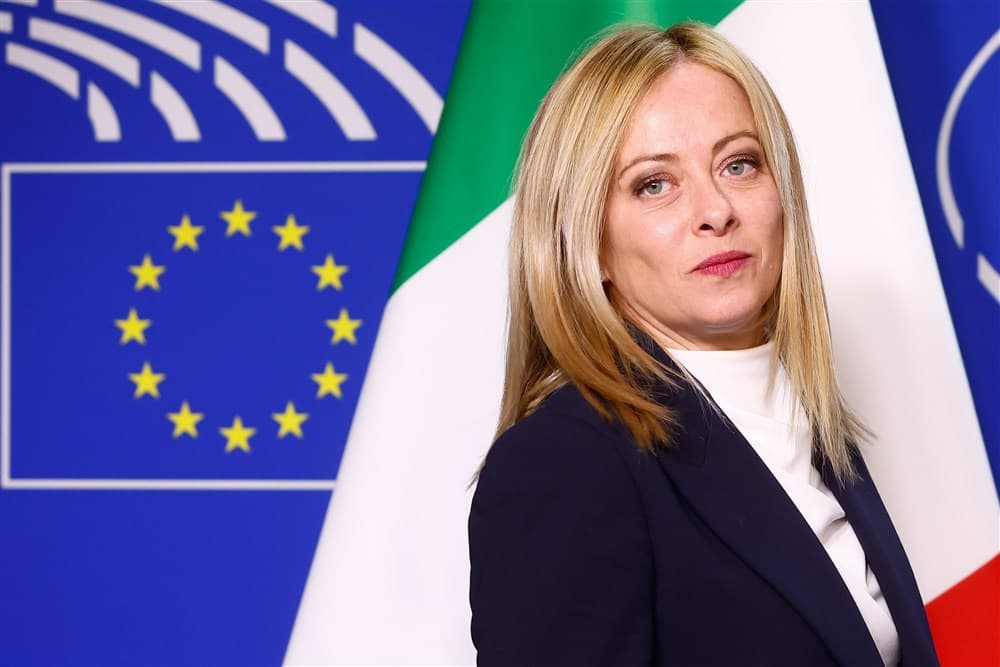
Italian Prime Minister Giorgia Meloni has announced plans for a sweeping legislative package aimed at reshaping public education, targeting classroom integration, and enforcing cultural alignment. The policy push, centered around giorgia meloni School Veil Ban proposals, aims to bar face-covering garments like burqas and niqabs in academic settings while establishing hard caps on non-native pupils in classrooms.
Speaking to a youth rally for her Brothers of Italy party in Rome, Meloni framed the upcoming decree as a necessary step to protect Italian national identity and prevent domestic children from feeling marginalized in their own schools. The announcement has sparked sharp debate across Europe, highlighting a growing tension between national cultural policies and religious expression in public spaces.
Classroom Quotas and Enforced Language Requirements
Beyond religious attire, a major pillar of the new proposal focuses on meloni Foreign Student Quotas, establishing a strict legal limit on the percentage of non-citizen students allowed in any single classroom. Currently, around 11.6% of students enrolled in Italian public schools are foreign nationals, but concentrations vary wildly across urban centers.
Meloni argued that high concentrations of non-native speakers impair the learning environment for everyone involved. According to the Prime Minister, when a classroom contains only one or two students who struggle with the language, teachers can offer targeted help to facilitate smooth integration. However, when non-Italian speakers form a significant portion of a class, overall educational progress slows down.
To address language barriers at the root level, the government plans to introduce Georgia Meloni Mandatory Italian Lessons for Parents. Under the upcoming decree, parents of foreign students who experience severe integration difficulties will be legally required to attend state-run Italian language courses.
Backlash Grows Over Face Veil Restrictions in Education
The most contentious element of the announcement involves the prohibition of full-face religious coverings in schools. The meloni ban veils controversy quickly drew reactions from civil rights groups, opposition politicians, and religious organizations across Italy.
Defending the measure, Meloni stated that open communication and visible identity are essential components of an inclusive educational environment. She emphasized that anyone choosing to build a future in Italy must respect its laws, social norms, and core principles, including gender equality and secular public spaces.
Critics, however, argue that banning religious attire in educational settings risks alienating minority communities rather than integrating them. Opposition leaders warned that forcing strict attire bans could drive marginalized families toward private religious instruction or trigger unnecessary social friction.
Legislative Next Steps for the Cabinet
The proposed measures are set to be formally submitted to the Council of Ministers in the coming weeks. If approved by the cabinet, the bill will head to the Italian parliament for debate, where Meloni's right-wing coalition holds a firm majority. The debate also comes as Meloni's wider political role in Europe continues to attract international attention, particularly around Italy's position on migration, defense and relations with other European partners.
Supporters believe the legislation sets clear standards for cultural integration and preserves educational quality. Opponents maintain that enforcing student caps and dress codes in public schools presents serious constitutional and practical challenges. As the decree approaches its first parliamentary hurdles, the national debate over identity, integration, and religious freedom in Italian classrooms is only beginning to heat up.
Conclusion
Giorgia Meloni's latest education initiative represents a bold, uncompromising approach to national integration and cultural preservation in Italy. By coupling face veil prohibitions with classroom enrollment caps and parental language mandates, the government is attempting a structural overhaul of how public schools assimilate non-native populations. Whether these measures foster genuine unity or deepen political fault lines will depend heavily on how the upcoming parliamentary debate unfolds and how the rules are applied on the ground.